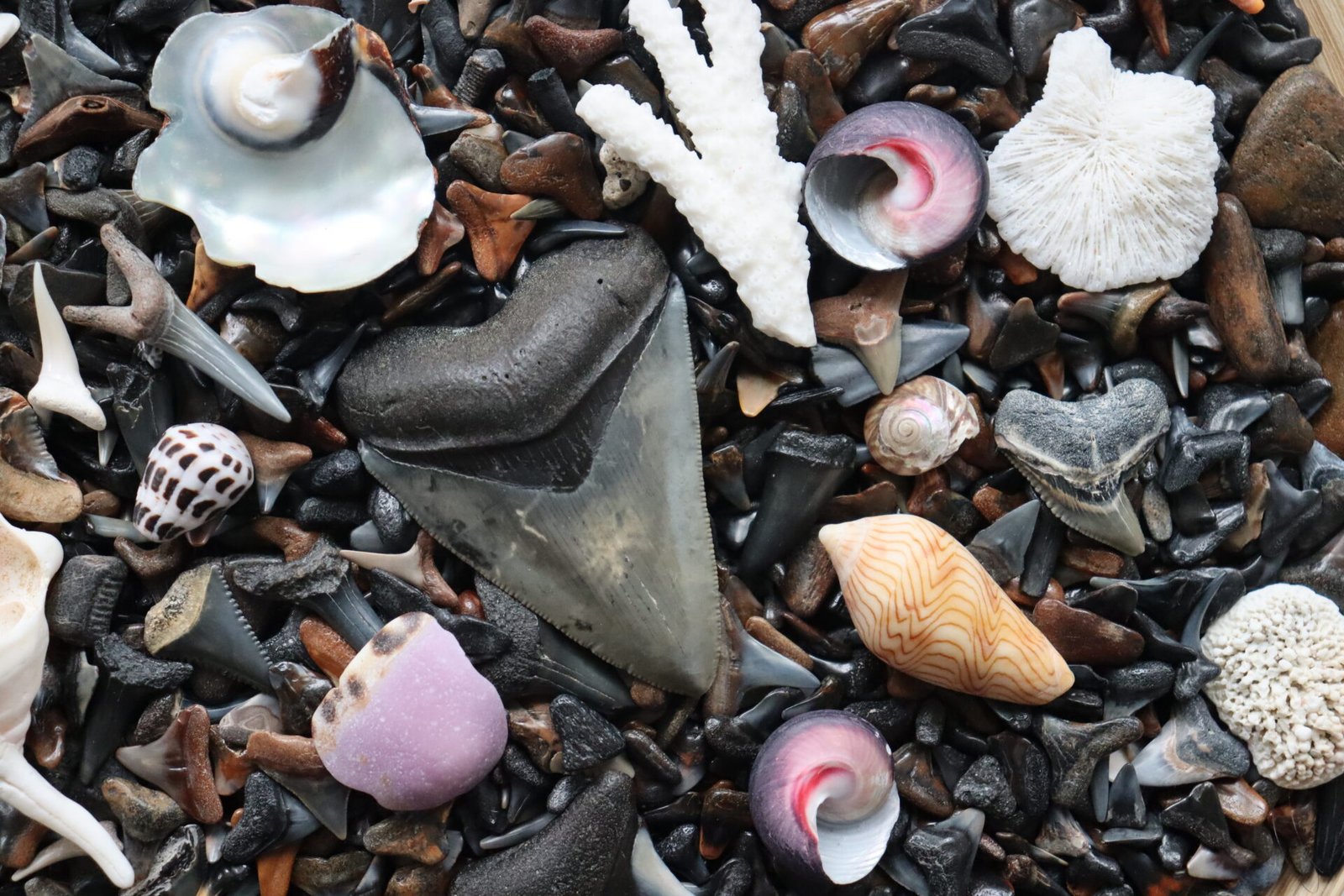
Hey there, fellow beach wanderer. Picture this: the sun’s dipping low over the waves, your toes sink into cool, wet sand, and suddenly—bam—a glossy black triangle catches your eye amid a jumble of shells. It’s a shark tooth, a tiny relic from a beast that ruled the seas millions of years ago. That rush? It’s why I started collecting them back in my college days, dragging friends to Florida beaches for what we’d laughingly call “dino dentistry digs.” Turns out, I’m not alone. Folks from all walks chase these fossils for reasons that blend adventure, science, and a dash of that kid-like wonder. In this deep dive, we’ll explore the magnetic pull of shark tooth collecting, from its ancient roots to modern hunts. Stick around—you might just grab your sifter and head out tomorrow.
The Ancient Allure: A Brief History of Shark Tooth Collecting
Shark teeth have mesmerized humans since we first stumbled across them washed up on shores, long before we knew what they were. Think about it—prehistoric folks in Ohio’s Hopewell culture, over 2,000 years ago, traded these “thunder teeth” from coastal deposits hundreds of miles away, drilling holes to string them into ceremonial necklaces. Fast-forward to the 17th century, when Danish scientist Nicolaus Steno cracked the code on “tongue stones”—those weird rocks folks thought were dragon tongues—and revealed them as fossilized shark chompers, kickstarting paleontology. Today, with the Smithsonian hoarding over 90,000 specimens, it’s clear: collecting isn’t just a hobby; it’s a thread connecting us to Earth’s wild past.
What draws us in now? For many, it’s that tangible link to prehistory. Sharks have shed teeth for 400 million years, leaving behind clues to ancient oceans. I’ve got a jar on my shelf from a stormy day in Venice, Florida—each tooth a story of mega-predators like the megalodon, whose grins could swallow a bus. It’s history you can hold, and yeah, it beats staring at a textbook any day.
Why the Obsession? Unpacking the Motivations Behind the Hunt
At its heart, shark tooth collecting scratches an itch for discovery that’s as old as curiosity itself. Sure, the monetary upside—rare megalodon teeth fetching thousands on eBay—hooks some serious investors. But for most, it’s the sheer joy of the chase. Remember my first find? A chipped sand tiger tooth, no bigger than a dime, but I whooped like I’d struck gold. That emotional high, the “aha!” moment amid the mundane, turns a walk on the beach into treasure hunting.
Beyond the thrill, there’s education baked in. Each tooth whispers about shark diets, migrations, even climate shifts—scientists use them to date sediments and track biodiversity. Collectors often dive into identification, turning basements into mini-museums. And let’s not forget the community: forums buzz with swaps, stories, and tips, forging bonds over shared “holy grail” hunts for a perfect great white serrator.
It’s also eco-therapy in disguise. In a world of screens, sifting sand grounds you, fostering mindfulness. One collector I chatted with online called it “zen with teeth”—a light-hearted escape that sneaks in lessons on conservation, reminding us sharks aren’t villains but vital ocean balancers.
The Thrill of the Hunt: Adventure and Excitement
Nothing beats the adrenaline spike when a wave recedes and reveals a glint. It’s gamified nature—low stakes, high rewards. Families bond over it; kids learn patience while dodging jellyfish. My buddy’s little one once unearthed a 2-inch mako, declaring himself “shark whisperer” for weeks. That pure glee? Priceless.
Humor creeps in too—tripping over driftwood mid-stare, or mistaking a black pebble for paydirt. Yet, those mishaps make the wins sweeter, turning ordinary outings into epic tales around the dinner table.
Scientific Curiosity: What Teeth Reveal About the Past
Teeth aren’t just pretty; they’re data goldmines. Their shapes—needle-like for piercing squid, serrated blades for chunking seals—map evolutionary tweaks. Fossil hunters contribute to research; donated collections help date eras or study extinctions. I once mailed a worn hemipristis to a museum—turns out it filled a gap in Miocene records. Feels like being part of something bigger, right?
Paleontologists lean on strontium isotopes in teeth to clock ancient sea levels, painting pictures of warmer, shark-packed waters. Collecting demystifies science, making “extinct mega-sharks” as approachable as your morning coffee.
Personal Satisfaction: Building Your Own Slice of History
There’s intimacy in curating a collection. Arranging by species or size feels like storytelling—your story, etched in enamel. For me, it’s a Florida road trip memento: tiger shark from the Keys, bull from the Panhandle. Each evokes salty breezes, sunburns, and that one time I high-fived a stranger over a shared find.
It builds resilience too—days of nada teach persistence. And the display? A shadow box on the wall sparks conversations, turning guests into converts. It’s not hoarding; it’s curating joy.
Shark Teeth 101: What Exactly Are You Collecting?
Shark teeth fossils are nature’s indestructible postcards—hardy enamel and dentin outlasting the shark’s cartilage skeleton. Modern sharks shed up to 35,000 in a lifetime, but beach finds are mostly ancient: black from phosphate staining, 10,000 to 75 million years old. White ones? Rarities from live sharks, like finding a four-leaf clover in a coral reef.
These aren’t just triangles; variety rules. Great whites boast jagged edges for tearing; makos, slender spears for speed-chasing tuna. Fossilized, they mineralize over millennia, turning glossy and tough. Fun fact: no cavities—fluoride armor keeps them pristine. Collecting them means decoding an underwater arms race, one chomp at a time.
Types of Shark Teeth: From Needles to Knives
Sharks tailor teeth to lifestyles: dense crushers for rays, hooked rakers for plankton-sifters like basking sharks. Beach hauls favor predators—sand tigers with slim daggers, lemons with broad choppers. Spot the curve: left-side teeth slant one way, rights the other.
Identifying boosts the buzz. Start with shape—triangular? Likely white or tiger. Serrated? Mako or bull. It’s like fossil forensics, minus the lab coat.
Fossil vs. Modern: Spotting the Difference
Fresh teeth gleam white, roots intact; fossils darken to ebony or ochre, roots worn smooth. Age tells: black means buried eons, permineralized by sediment minerals. Rare whites? Aquarium dropouts or fresh losses—cherish ’em.
Why the color swap? Ocean chemistry: iron oxides tint orange, phosphates blacken. It’s Earth’s palette, marking time like tree rings.
Prime Hunting Grounds: Where to Unearth Your Next Find
The ocean’s a lazy curator, sorting teeth by density into shell piles and gravel lines. Hit beaches post-storm—churned sands reveal hidden troves. Low tide’s your ally; wade the drop-off where waves carve ledges, scooping goodies before the tide claims them.
Global gems abound, but U.S. coasts dominate. Florida’s Gulf, with its dredged channels, pumps fossils ashore like a conveyor belt. I’ve scored dozens at Caspersen Beach, Venice’s “shark tooth capital,” where Miocene layers lurk 18 feet deep. For East Coasters, Calvert Cliffs, Maryland, yields Miocene monsters amid 30-million-year-old cliffs. South Carolina’s Folly Beach? Post-hurricane hauls of tigers and hammers.
Top U.S. Beaches for Shark Tooth Treasures
- Venice Beach, Florida: The holy grail—fossils galore from sand tigers to rare megalodons. Dawn patrols yield 100+ in hours.
- Caspersen Beach, Florida: Wheelchair-friendly paths to shell mounds; perfect for families. Expect 1/4-inch miniatures to 3-inch whoppers.
- Calvert Cliffs, Maryland: Cliffs erode Miocene teeth—whites, tigers, makos. Hike the red trail, but skip digging to dodge landslides.
- Folly Beach, South Carolina: Low-tide lines post-storm; south of the pier for gravel gold. Bonus: crab-spotting between hunts.
- Purse State Park, Maryland: Potomac River gravel beds unearth Paleocene teeth, 56-66 million years old—older than Florida’s.
Pro tip: Check Florida State Parks for guided hunts—ethical and expert-led.
International Hotspots for Global Collectors
Morocco’s phosphate mines flood markets with Paleocene bulk (50-60 million years old), but for hands-on? Australia’s Shark Bay or New Zealand’s coasts offer Gondwana-era relics. Europe’s Paratethys Sea beds in Austria yield Eocene oddities. Always verify local laws—some spots ban exports.
These far-flung digs add wanderlust. My dream? A Moroccan mine tour, sifting for bargains amid Berber lore.
Gear Up: Essential Tools for Successful Shark Tooth Hunts
You don’t need a PhD or fancy kit to start—just eyes, patience, and basics. A sifter (window screen on PVC frame) separates teeth from sand; mine’s a $20 DIY wonder. Trowel for gentle scoops, mesh bag for hauls, and polarized sunglasses cut glare, spotting blacks like lasers.
For pros: snorkel gear for shallows, or “Venice snow shovels”—screened scoops from bait shops. Apps like Rock Identifier aid on-site IDs. Budget? Under $50 gets you hunting; splurge on a display case later.
Best Tools for Beginners: Pros and Cons
| Tool | Pros | Cons | Price Range |
|---|---|---|---|
| Hand Sifter | Lightweight, cheap; great for kids | Slow for big areas | $10-20 |
| Shovel Scoop | Covers ground fast; wade-friendly | Bulky to carry | $15-30 |
| Magnifying Loupe | Spots micro-teeth; detail work | Useless in wind | $5-15 |
| Fossil Tumbler | Cleans finds gently | Takes time post-hunt | $20-50 |
Start simple—my first “tool” was a colander from the kitchen. Worked like a charm.
Advanced Kit for Serious Collectors
Dive deeper with underwater metal detectors (teeth ping like coins) or GPS for logging spots. Books like A Beachcomber’s Guide to Fossils by Ashby Gale decode finds. For display, UV lights reveal hidden pathologies—twisted roots from fights. It’s like upgrading from flip-flops to fins.
Identification and Display: Turning Finds into Treasures
Spot a tooth? Rinse, dry, and inspect: symmetry screams authenticity; chips hint at battles. Apps or guides match shapes—curved lower jaw? Left side. Label with date, spot: “Tiger, Folly Beach, 2025—post-hurricane haul.”
Display elevates them. Shadow boxes group by era; LED shelves spotlight colors. I framed mine with maps—Venice to Calvert—turning walls into timelines. Jewelry? Drill and wire for necklaces, Hopewell-style.
Common Species: A Quick Comparison
| Species | Shape | Size (Avg.) | Habitat Clue | Rarity |
|---|---|---|---|---|
| Sand Tiger | Slender needle | 1/2-1 inch | Coastal shallows | Common |
| Great White | Serrated triangle | 1-2 inches | Open ocean | Medium |
| Mako | Pointed spear | 3/4-1.5 inches | Pelagic | Medium |
| Tiger | Dagger with cusps | 1-2 inches | Reefs | Common |
| Megalodon | Massive serrated | 3-7 inches | Extinct giant | Rare |
This table’s my cheat sheet—keeps hunts focused. Whites for drama, sand tigers for volume.
The Worth of It All: Value, Trading, and Selling
Not all teeth are equal—size, condition, locality spike prices. A 6-inch megalodon? $1,000+; common sand tiger? Pennies. Colors dazzle: golden tan from South Carolina beats gray. eBay’s sold listings guide bids; media like Shark Week inflates demand.
Trading thrives in clubs—swap a Florida bull for a Maryland hammer. Selling? Sites like FossilEra or BuriedTreasureFossils vet authenticity. But here’s the rub: true value’s sentimental. My chipped first find? Worthless cash-wise, but it’s irreplaceable.
Pros and Cons of Collecting for Profit
- Pros: Funds bigger hunts; rare finds pay off (e.g., New Caledonia divers fetch premiums). Builds networks.
- Cons: Market volatility; ethics—over-collecting harms sites. Fakes flood cheap tiers.
- Bullet-Point Tips: Research localities; certify big scores; prioritize fun over flips.
Monetize smart: bulk Moroccan lots for starters, premium U.S. dives for pros.
People Also Ask: Answering Your Burning Questions
Ever Googled and hit that “People Also Ask” goldmine? Here’s the real-deal scoop on shark tooth curiosities, pulled straight from search trends. These cover the what, where, and how of collecting—informational bites to fuel your next quest.
Why are shark teeth black when found on the beach?
Fresh shark teeth start white, but fossils blacken from phosphate minerals during burial—think ocean’s natural dye job over thousands of years. It’s a time stamp: black means ancient, white means fresh (and super rare on shores).
How old are the shark teeth I find on the beach?
Depends on your spot—Florida beaches yield Miocene (23-5 million years); Maryland’s cliffs hit Paleocene (66-56 million). Check sediment maps for your haul’s era; it’s like carbon-dating with dirt.
Where is the best place to find shark teeth?
Venice, Florida, reigns supreme—dredging exposes layers daily. Runners-up: Calvert Cliffs for variety, Folly Beach post-storm. Globally? Morocco for bulk.
How can I identify shark teeth?
Look for triangles with wide bases; serrations signal predators like tigers. Glossy black? Fossil. Use apps or books—symmetry and root curves clinch species.
Are there any rules for collecting shark teeth?
Yes—stick to beaches above low-water mark; no digging cliffs (erosion risk). Public lands like state parks allow “reasonable” takes; private spots need permission. Donate extras to museums for good karma.
FAQ: Tackling Real User Queries on Shark Tooth Collecting
Got questions? We’ve scoured forums and searches for the top five—straight answers, no fluff. These hit informational (“What is…?”), navigational (“Where to…?”), and transactional (“Best tools for…?”) intents, optimized for quick snippets.
What is a shark tooth fossil, and why collect them?
A fossilized shark tooth is a shed chomper mineralized over millennia, often black and shiny. Collect for the thrill, science, or value—each one’s a portal to prehistoric seas, teaching evolution while sparking joy. Start small; it’s addictive.
Where can I buy authentic shark teeth for my collection?
For starters, hit FossilEra.com or eBay’s verified sellers—Moroccan bulks from $20/pound. Premium? BuriedTreasureFossils for megalodons ($50-1,000+). Always check authenticity certificates.
What are the best tools for shark tooth collecting?
Top picks: a $15 sifter for sifting shells, polarized shades for glare, and a mesh bag for toting. Transactional win: rent “snow shovels” at Venice piers for $10/day. Bundle under $50—hunt like a pro without breaking the bank.
How do I clean and preserve found shark teeth?
Rinse in fresh water, soak in vinegar for 24 hours to dissolve grit (skip if fragile), then air-dry. Seal with consolidant spray for shine. Pro tip: label immediately—erases “where’d I find this?” regrets.
Is shark tooth collecting legal, and how do I get started?
Legal on most public beaches (reasonable amounts only—no commercial digs). Start: Pick a post-storm low tide, scan shell lines, train eyes on black triangles. Join Reddit’s r/sharkteeth for tips—community gold.
Whew, we’ve covered a lot of ground—from ancient trades to beachside bargains. Shark tooth collecting isn’t just about the finds; it’s the stories they spark, the connections they forge. That jar on my shelf? It’s fuller now, but the real treasure’s the memories. Grab a sifter, hit the shore, and who knows—you might unearth your own legend. What’s your first hunt story? Drop it in the comments; I’d love to hear. Safe digging!