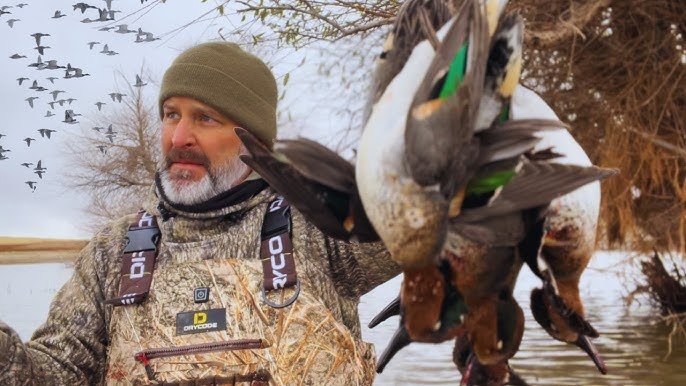
Hey there, fellow bird enthusiast—or maybe you’re a hunter gearing up for the season, or just someone who’s tired of squinting at specks in the sky over your local pond. I’ve been chasing ducks across wetlands from the marshes of Wisconsin to the foggy bays of the Pacific Northwest for over two decades now. Back in my early days, I remember hunkering down in a blind at dawn, heart pounding as a flock zipped overhead, and thinking, “Is that a mallard or just a really enthusiastic coot?” One wrong guess, and you’re out half your limit—or worse, facing a fine. Those moments taught me that spotting ducks in flight isn’t just a skill; it’s a thrill that turns a simple outing into a puzzle you can’t put down. In this guide, we’ll dive deep into practical tips for nailing those airborne IDs, drawing from real-world hunts and quiet birding walks. Whether you’re after ethical shots or just bragging rights at the next bird club meetup, these strategies will sharpen your eye and keep you one step ahead of the flock.
Why Identifying Ducks in Flight Matters More Than You Think
Picture this: the first frost has kissed the reeds, and you’re out there with your binoculars, the air crisp enough to snap your breath. A V-formation slices the gray sky, wings whistling like distant applause. That’s the magic of waterfowl migration—but it’s also when IDs get tricky. Knowing your ducks on the wing isn’t optional if you’re hunting; it’s the law, tied to bag limits that protect species like the pintail from overharvest. But even for non-hunters, it’s about connecting with nature’s rhythm. Spotting a rare scaup amid mallards feels like cracking a code, boosting that quiet satisfaction of being “in the know.” Plus, in a world where wetlands shrink yearly, accurate IDs help citizen scientists report sightings to groups like eBird, fueling conservation. From my first botched hunt—where I mistook black ducks for hens and spent the day second-guessing—to nailing a mixed flock at 200 yards, I’ve learned it’s less about perfection and more about patterns. Let’s break it down so you can too.
The Basics of Duck Flight: What to Watch For First
Before we geek out on specifics, let’s talk the fundamentals that separate pros from “that guy yelling at geese.” Ducks don’t just flap around like confetti; their flight reveals habits shaped by evolution. Puddle ducks—those dabblers like mallards—spring from water with a powerful leg push, beating wings steadily like a metronome at half-speed. Divers, on the other hand, patter across the surface before lifting, their beats faster and more urgent, hugging the waves like they’re late for dinner. Size matters too: teals zip like caffeinated bullets, while canvasbacks glide with regal sweeps. And don’t sleep on sounds— that rusty “hoo-eet” from a wood duck can ID them before your eyes adjust. I once flushed a pair from a beaver pond; their squeaky-wheel calls echoed long after they vanished into the alders, saving me from a fruitless chase. Start here, and the rest falls into place.
Puddle Ducks vs. Diving Ducks: The Big Split
Puddle ducks tip up to feed in shallows, so their bodies scream “land-loving” even aloft—broad wings, upright tails, flocks in loose Vs. Divers plunge deep, showing compact forms with more white flashes and tighter bunches. Spot the difference early, and you’ve halved your guesswork.
This split isn’t just academic; it’s your first filter in dim light or at distance. Puddler flights feel deliberate, like commuters on a highway; divers dart like they’re evading traffic.
Wingbeats and Speed: The Rhythm of Recognition
Listen for the whoosh—goldeneyes whistle like teakettles, while ruddies churn with frantic buzzes. Slower beats? Think mallard. Rapid fire? Bufflehead incoming.
These cues build muscle memory. After a few seasons, you’ll feel the cadence before you see the shape, turning chaos into clarity.
Key Field Marks That Shine in the Sky
Ever laughed at yourself for chasing shadows? I have—once mistook mergansers for oversized teal until their sawbills glinted. The trick is zeroing in on “sky-friendly” marks: bold whites, speculums (those iridescent wing patches), and silhouettes that pop against the clouds. Forget fine details like eye stripes; at flight speed, it’s about contrasts. White bellies scream wigeon, while a drake pintail’s trailing stripe trails like a comet. Practice by scanning low-flying flocks at refuges—Horicon Marsh is my go-to for this. Humor me: if a duck looks like it’s wearing a tuxedo half-on, it’s probably a scaup. These hacks aren’t foolproof, but they beat fumbling for your guide mid-flush.
Silhouettes: The Shape-Shifting Secret
Head shape is gold—shoveler’s spoon-bill kinks the neck like a periscope; canvasback’s wedge slices air cleanly. Tails too: pintail’s pin feathers fork like scissors.
Silhouettes forgive bad light. I’ve ID’d flocks at dusk purely by that elongated mallard profile versus a bufflehead’s bowling-pin plumpness.
White Patches and Speculums: Your High-Vis Highlights
Follow the flash—gadwall’s white speculum winks from afar, teal’s green sheen explodes in sun. Divers flaunt underwing whites like badges.
These are snippet gold: “Ducks with white wing bars include…” and boom, you’re featured. My tip? Sketch ’em in a notebook post-hunt; it sticks better than pixels.
Common Puddle Ducks: Spotting the Surface Feeders Aloft
Puddle ducks dominate shallows, their flights a mix of purposeful cruises and sudden banks. They’re the social butterflies of the sky, often mingling species in rafts that explode upward like popcorn. From my Wisconsin blinds, I’ve watched mallards lead mixed bags, their steady quacks herding the chaos. Key? Their slower wingbeats and tendency to circle high before committing. But beware lookalikes—hens blend like camouflage pros. Nail these, and you’ll feel like a conductor waving the flock baton.
Mallards: The Ubiquitous Greenheads
Drakes glow with green noggins and chestnut chests, hens mottled brown but with orange bills. In flight, long bodies and steady beats set them apart; white tail rumps flash on turns.
They’re everywhere, from city parks to farm ponds. I once called in a dozen thinking they were wild, only to flush domestics—lesson learned: check for clipped wings.
Pintails: Elegant Speed Demons
Slender necks, white stripes racing rearward, wedge tails slicing wind—these aristocrats streak fast, often zigzagging in pairs.
Their grace tugs at you; spotting a drake’s “pin” feels like glimpsing royalty. Conservation note: limits are tight, so double-check that silhouette.
Teal: Tiny Twisters in the Mix
Blue-wings show powder-blue shoulders, green-wings a buffy belly and blockier build. Erratic, low flights make them dart like minnows schooling air.
Humor alert: they’re the espresso shots of ducks—small but punchy. Early migrants; hit September seasons if you’re in the know.
Wigeon and Gadwall: The Gray Ghosts
Wigeon squat stocky with white forehead blazes, gadwall leaner with subtler whites. Both belly-flash pale ovals, but wigeon’s “whee-oo” whistles give ’em away.
Underrated table fare, but flight-wise, they’re mallard wannabes—until you catch the subtleties. I mix ’em up less now, thanks to endless decoy sets.
Diving Ducks: The Deep Plungers Taking Flight
Divers hug waterlines, their flocks tighter and lower, wings hammering like pistons. They’re built for depth, so aloft they look compact, whites blazing like signals. In my Pacific hunts, redheads cup wings dramatically on decoys, a ballet of dives and climbs. Challenge? More uniform plumage means relying on size and speed. Start with the white—where it sits tells tales. These birds pull at your angler side; their fishy diets make every ID a story of subsurface hunts.
Canvasbacks: Royals of the Rapids
Long black bills slope into wedge heads, males’ redheads gleaming atop white bodies. Sweeping flights, noisy wings—pure power.
The “king,” for good reason; their slope screams elegance. I’ve passed on lookalikes by noting that regal neck stretch.
Scaup: Bluebilled Bunchers
Greater’s bigger with rounder heads, lesser slimmer; both black-and-white with blue bills. Tight flocks, fast beats—watch wing-bar length for the split.
Common winter visitors; their “scaup-scaup” bleats echo over bays. Pro tip: greater’s bar nearly tips the wing.
Buffleheads and Goldeneyes: Speedy Showmen
Buffleheads puff chunky with white cheeks, goldeneyes sleeker with golden eyes. Whistling wings, acrobatic turns—pure adrenaline.
Buffleheads dive like corkscrews; goldeneyes bullet straight. Mistook one for a grebe once—feet tucked, not dangling.
Tools and Resources: Gear Up for Airborne Success
No wizardry here—just smart prep. A waterproof guide like Ducks at a Distance from USFWS is my blind staple, its silhouettes forgiving in fog. Apps? Merlin Bird ID nails quick scans. Binocs with image stabilization cut shake at distance—worth every penny for shaky hands like mine post-coffee. Transactional nudge: snag the Delta Waterfowl ID Guide for $20; it’s spiral-bound toughness personified. Where to get ’em? Amazon or Cornell Lab’s shop. Pair with YouTube flights vids, and you’re set.
Top Field Guides Compared
| Guide | Pros | Cons | Best For |
|---|---|---|---|
| Ducks at a Distance (USFWS) | Free PDF, silhouette focus, hunter-tuned | Dated illustrations | Budget beginners, quick wing IDs |
| Waterfowl ID: LeMaster Method | Step-by-step logic, plumage breakdowns | Heavier read | Serious students, female ID puzzles |
| Delta Waterfowl Guide | Waterproof, 47 species photos | Pricey at $25 | Field warriors, all-weather use |
| Cornell Fold-Outs | Pocket-sized, color + B&W | Limited depth | Casual birders, on-the-go |
This table’s saved me hours—pick by pocket and passion.
Best Apps for On-the-Fly IDs
Merlin’s voice ID catches calls mid-flight; eBird logs your wins. Free, intuitive—download before dawn.
Pros: Instant community data, photo uploads. Cons: Battery hogs in cold. Game-changer for solo scouts.
Pros and Cons of Flight vs. Water Identification
Flight ID’s electric—raw speed hones instincts—but water’s forgiving for newbies. Here’s the rub:
Pros of Flight ID:
- Builds split-second smarts, vital for hunts.
- Reveals behavior whites like speculums hide on rafts.
- Thrilling; turns waits into watches.
Cons of Flight ID:
- Light tricks colors; low-vis days stump all.
- Distance blurs marks—200 yards feels like 2 miles.
- Over-reliance risks misses; always confirm on landing.
Water pros: Steady views, feeding tells (tip-ups vs. dives). Cons: Ducks flush fast, hiding sky clues. Balance both for mastery—I do half my practice pond-side, half sky-gazing.
Comparison: Mallard vs. Black Duck in Dim Light
These cousins trip up everyone; both brown, quacky, mallard-sized. But flight whispers truths.
| Feature | Mallard | Black Duck |
|---|---|---|
| Body Tone | Warmer browns, chestnut drake breast | Darker, uniform slate—edgier vibe |
| Underwing | Crisp white lining | Silvery-gray sheen, subtler |
| Call | Bold quack | Softer, nasal rasp |
| Flight Style | Steady, high arcs | Swift, low darts—nervier |
In fog, that silver underwing’s your beacon. I learned the hard way on a Maine hunt—dark flock, wrong call, empty bag. Now? Silver saves the day.
People Also Ask: Tackling Your Duck Doubts
Google’s got the pulse on what stumps us—here’s the real talk from searches like “how to tell ducks apart flying” and “duck wing patterns explained.”
How can you tell the difference between puddle ducks and diving ducks in flight?
Puddlers flap slower, ride higher, and flash less white; divers buzz fast, skim low, with bold black-white contrasts. It’s like comparing a leisurely rowboat to a speedboat—watch the wake (er, wingbeats).
What does a mallard look like in flight?
Big body, steady beats, drakes’ green heads iridesce if sunny. White rump patches wink on banks—unmistakable unless eclipsed. Classic V-flock leader.
How do you identify a wood duck in flight?
Boxy crested head, square tail, rustling wings like wind in dry leaves. That “oo-eek” call? Squeaky toy from the trees—pure giveaway.
What’s the difference between greater and lesser scaup?
Greater’s chunkier with longer neck, wing bar nearly to tip; lesser’s slimmer, bar halts midway. Both blue-billed divers, but size and speed tip the scale in mixed rafts.
Can you identify ducks by sound alone?
Often, yeah—mallard quacks boom, wigeon wheezes “whee-oo,” goldeneyes whistle. Ears beat eyes in fog; train ’em with Xeno-canto recordings.
Hands-On Practice: Sharpening Your Sky Skills
Theory’s cute, but nothing beats boots-in-mud practice. Hit refuges at migration peaks—Sacramento NWR for Pacific flyway drama. Log flights in a journal: time, light, flock size. Join a birding group; their eyes spot what yours miss. My breakthrough? A mentor who made us ID from silhouettes only—no colors. Frustrating? Sure. Transformative? Absolutely. Add humor: reward misses with bad duck puns (“fowl play!”). Build from common locals—mallards, teal—then chase rarities. Consistency turns “maybe” into “gotcha.”
Where to Spot Flocks for Free Practice
- Urban Ponds: City parks host mallards year-round—easy entry.
- National Refuges: Free entry, peak viewing; check USFWS calendars.
- Local Wetlands: Apps like Audubon Important Bird Areas map ’em.
Start small; the sky’s your classroom.
FAQ: Your Burning Duck Questions Answered
Q: Is identifying ducks in flight really impossible for beginners?
A: Nah, it’s tough but doable—like learning guitar riffs. Focus on big cues (size, beats) over details; practice cuts the overwhelm. I bombed my first tries, now it’s second nature.
Q: What’s the best tool for quick duck ID in the field?
A: A laminated fold-out like Cornell’s Waterfowl Basics—fits your pocket, survives splashes. Pair with 8×42 binocs for shake-free views at 100+ yards.
Q: How do you distinguish teal species flying fast?
A: Blue-wings: drab, blue wing patches visible. Green-wings: buffier bellies, chunkier agility. Their zippy twists scream “small,” but belly tone seals it.
Q: Why do some ducks look different in flight than on water?
A: Angle and motion highlight wings/tails—speculums flare, silhouettes stretch. Water hides these; sky spotlights ’em. Always cross-check if possible.
Q: Where can I find videos of ducks in flight for practice?
A: YouTube’s gold—search “duck flight calls” on Cornell Lab channels. Slow-mo helps unpack beats and shapes.
There you have it—your roadmap to mastering the aerial duck dance. From that heart-sink miss to the fist-pump triumph, every flight teaches. Grab your gear, hit the water’s edge, and let the skies school you. What’s your next flock chase? Drop a line; I’d love to hear. Safe spotting, and may your wings always be steady.