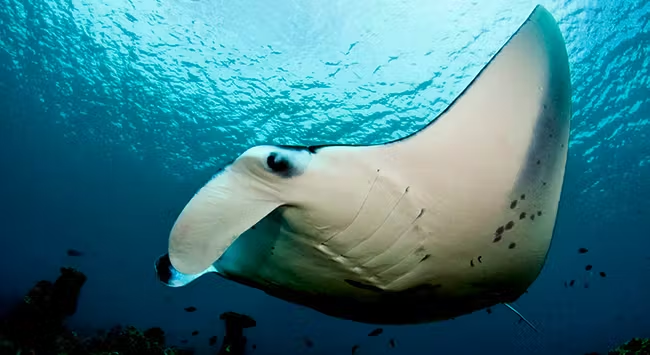
Picture this: It’s dusk off the rugged coast of Hawaii’s Big Island, and I’m bobbing in the warm Pacific, snorkel in mouth, heart pounding like a drum. A shadow glides beneath me—massive, graceful, like a living blanket unfurling in the current. Then, those curious eyes lock onto mine, and up it comes, somersaulting lazily, mouth agape in a plankton feast. That was my first manta ray encounter, back in 2018 during a night snorkel that left me breathless and hooked. These gentle giants aren’t just ocean oddities; they’re smart, social wanderers that remind us how wild the sea really is. If you’re dreaming of spotting one yourself or just curious about these filter-feeding flyers, this guide dives deep into spotting them, what fuels their endless glide, and the sun-soaked waters they call home.
What Are Manta Rays?
Manta rays belong to the Mobulidae family, a quirky clan of rays known for their wing-like pectoral fins and devilish head “horns” that once scared sailors silly. Unlike their stingray cousins, mantas pack no tail barb—just pure, peaceful vibe. They’re the ocean’s pacifists, cruising at speeds up to 10 miles per hour with brains big enough to rival dolphins in smarts. I’ve chatted with researchers who swear mantas recognize familiar faces, even after years apart, which makes every swim feel like reuniting with an old friend.
These cartilaginous fish (yep, skeletons of bendy cartilage, not bone) come in a few flavors, but we’ll zero in on the stars: the reef manta and the giant oceanic manta. They’re vulnerable on the IUCN Red List, thanks to fishing pressures, but spots like Indonesia show tourism can flip the script—one live manta might bank a million bucks in dive fees over its life. Fun fact: Their Spanish name, “manta,” means blanket, and watching one flap by? It’s like the sea draped itself in midnight silk.
No wonder they’re bucket-list material for divers. But before you book that trip, let’s get you spotting savvy.
How to Identify Manta Rays
Spotting a manta isn’t rocket science, but it helps to know their blueprint—think diamond-shaped body with fins spanning wider than a king-size bed. From afar, they look like stealthy UFOs slicing through blue, but up close? Pure poetry in motion. I once mistook a devil ray for a manta during a rushed dive in the Maldives; lesson learned: check the horns.
Physical Characteristics
Start with the basics: a broad, flat disc body up to 29 feet across for giants, tapering to a slender tail that whips like a rudder. Those cephalic fins—curled like question marks—frame a cavernous mouth perfect for slurping supper. Skin’s rough with denticles (tiny teeth-like scales), and colors range from inky black to ghostly white, often with Y-shaped belly spots unique as fingerprints for ID’ing individuals. Humor me: if mantas had Instagram, their bellies would be the ultimate bio hack.
Eyes sit on wingtips, giving them 360-degree paranoia-proof vision, and gills flutter like delicate fans. No teeth to speak of—just raspy plates for grinding grub. Females bulk up bigger, hitting 3,000 pounds; males are sleeker charmers.
Spotting Species Differences
Two main mantas rule the waves: reef (Mobula alfredi) and oceanic/giant (Mobula birostris). Reefs hug shorelines with light “faces” (no dark shoulder bands) and rounded dorsal fins; giants roam open blue with darker masks and sharper tails, sometimes sporting a vestigial spine. A third, the Atlantic manta (Mobula yarae), mirrors the giant but sticks to the Americas—rarer sighting, bigger thrill.
| Feature | Reef Manta (M. alfredi) | Giant Oceanic Manta (M. birostris) |
|---|---|---|
| Wingspan | 11-15 feet | 18-29 feet |
| Habitat Preference | Coastal reefs, lagoons | Open ocean, seamounts |
| Markings | Light face, spots under gills | Dark shoulder bands, uniform dark |
| Tail Spine | Absent | Present (small, harmless) |
| Distribution | Indo-Pacific | All oceans |
This table’s your cheat sheet—pulled from years of field notes and trust me, it beats fumbling with a wet field guide mid-dive.
Manta Ray Diet and Feeding Habits
Mant as aren’t picky eaters; they’re plankton vacuum cleaners, inhaling up to 60 pounds daily without breaking a sweat. Watching one barrel-roll for a krill jackpot? It’s like the ocean’s own ballet, equal parts hypnotic and hilarious—I’ve snorted water laughing at their enthusiasm.
What Do They Eat?
Zooplankton rules the menu: tiny copepods, mysid shrimp, crab larvae, mollusk babies, and fish eggs, plus occasional squid or small fish for variety. No plants here—these are carnivorous filterers, sifting meals finer than your grandma’s colander. A 1,000-pound manta downs 120 pounds weekly, that’s 19 million bits! Pro tip: Night dives amp up sightings as lights lure their buffet.
- Copepods: Shrimp-like specks, 80% of intake.
- Mysids: Ghost shrimp cousins, nutrient powerhouses.
- Larvae: Crab and mollusk juveniles, easy calories.
- Krill/Euphausiids: Swarming staples in upwellings.
They thrive on nutrient hotspots, not chasing prey—efficient, eco-friendly eating.
Ingenious Feeding Techniques
Mouths gape wide, cephalic fins funnel flow, and gill rakers trap goodies like a living net. Surface somersaults scoop surface blooms; chain feeding sees groups circle like a watery conga line, trapping plankton in cyclones. Deep divers hit 1,000 feet for mesopelagic munchies, muscles tuned for endurance.
Pros of this lifestyle: Low energy, high yield—mantas glide more than gulp.
Cons: Vulnerable to gill plate poaching, as those filters fetch big bucks in bogus tonics.
Where Do Manta Rays Live?
From coral cradles to pelagic playgrounds, mantas chase warm currents worldwide. My Maldives trip traced a reef manta’s loop from atoll to atoll, a reminder they’re not homebodies but horizon huggers.
Preferred Habitats
Tropical and subtropical waters suit best—think reef fringes, lagoons, and seamounts where plankton parties rage. Reefs favor shallows (30-100 feet) for cleaning stations; giants plunge pelagic depths, surfacing for sunbaked feasts. They dodge cold snaps, sticking above 68°F.
Cleaners like wrasses nibble parasites at “stations,” a spa day that boosts health. Upwellings and river mouths amp plankton, drawing crowds.
Global Distribution and Migration
All oceans host them, but hotspots cluster in Indo-Pacific (80% of sightings). Reefs rule Hawaii to Australia; giants globe-trot Atlantic to Pacific, migrating via gyres. Females pup in shallows every 2-5 years, site-faithful.
| Region | Key Species | Prime Spots |
|---|---|---|
| Indo-Pacific | Reef Manta | Maldives, Raja Ampat, Fiji |
| Pacific | Both | Hawaii, Galapagos |
| Atlantic | Giant Manta | Revillagigedo, Azores |
| Indian Ocean | Reef Manta | Mozambique, Seychelles |
Track ’em via Manta Trust apps for real-time maps.
Best Places to See Manta Rays
Craving that face-to-fin magic? Skip the aquarium; wild encounters beat tanks every time. My Hawaii night swim? Life-altering—lights mimic moon glow, pulling mantas like moths.
Top Dive and Snorkel Sites
Hawaii’s Kona coast tops lists for reef mantas; book ethical tours via Manta Ray Advocates. Indonesia’s Komodo or Mexico’s Socorro deliver giant encounters—deeper, wilder.
- Hawaii (Big Island): Night snorkels, 99% sighting rate, $100-150.
- Maldives: Day drifts over channels, beginner-friendly.
- Galapagos: Giants at Darwin Arch, advanced divers only.
- Australia (Lady Elliot Island): Year-round reefs, eco-resorts galore.
Gear up with a rash guard and reef-safe sunscreen; pros: Unforgettable bonds; cons: Jet lag and jelly stings.
Essential Tools for Manta Spotting
For armchair adventurers, apps like MantaMatcher ID rays via photos. Field kits? Waterproof camera, dive light, and logbook.
| Tool | Why It Rocks | Where to Get |
|---|---|---|
| GoPro Hero | HD underwater footage | Amazon, $300+ |
| Manta ID App | Spot pattern matching | Free, iOS/Android |
| Snorkel Vest | Buoyancy for relaxed viewing | REI, $50 |
Navigational win: These turn casual dips into citizen science.
Conservation Status and How You Can Help
Vulnerable giants face gill rakers hacked for myths—trade hits $30M yearly, no proven perks. Slow breeders (one pup every few years), they rebound tough. Bans in 30+ countries help, but bycatch lingers.
Choose operators like Oceana-backed tours; report sightings to aid tracking. Emotional hook: Saving mantas saves reefs—they aerate waters, boosting fish stocks.
People Also Ask
Google’s buzzing with manta queries—here’s the scoop, straight from searches and sea salts.
Are manta rays dangerous to humans?
Nope, they’re docile dreamers—no stings, no bites. That “devil ray” rep? Old sailor superstition. I’ve shared water with dozens; closest to peril was me tangling in kelp.
How big do manta rays get?
Giants hit 29-foot wingspans, weighing 3,000 pounds—bigger than a grizzly. Reefs top at 18 feet. Size queen? The oceanic manta, a true titan.
What’s the difference between manta rays and stingrays?
Mant as lack barbs, eat plankton (not bottom-scraping), and soar open water. Stingrays hug sand, zap with tails. One’s a flyer, other’s a lurker—easy mix-up till you see the horns.
Do manta rays have any predators?
Sharks (tigers, great whites) and orcas occasionally, but adults are tanky. Pups? Shark snacks. Rare remora hitchhikers add drag, not danger.
Can manta rays recognize themselves?
Mirror tests hint yes—they check spots like vain teens. Brainy for fish, with dolphin-level social smarts. Wild, right?
FAQ
Got lingering questions? These pop up in diveshops and forums—answered with field-tested truth.
What is the lifespan of a manta ray?
Up to 50 years in the wild, maybe more sans stress. Slow growers, they hit maturity at 8-10, prioritizing quality over quantity.
Are manta rays friendly?
Curious, yes— they’ll “hitch” divers for rides. But respect space; they’re wild, not pets. That Hawaii lift-off? Mutual magic, not mischief.
How can I snorkel with manta rays ethically?
Pick no-touch tours, avoid flash, follow Manta Trust guidelines. Lights okay at night, but dim ’em—plankton’s the draw, not dazzle.
Do manta rays migrate long distances?
Giants yes, crossing oceans via currents; reefs stick local but roam reefs seasonally. GPS tags reveal 1,000-mile jaunts for feeding fests.
What’s the best time of year to see manta rays?
Year-round in tropics, but summer upwellings spike plankton (and mantas). Hawaii? Winter for giants; Maldives? Monsoon calm.
There you have it—your passport to manta mastery. Whether plotting a plunge or pondering from the porch, these blanket-winged wonders weave stories deeper than the sea. Next time you’re beachside, scan the horizon. Who knows? Your own manta moment might be waiting. Dive in, stay curious, and let’s keep these gentle gliders gliding free.