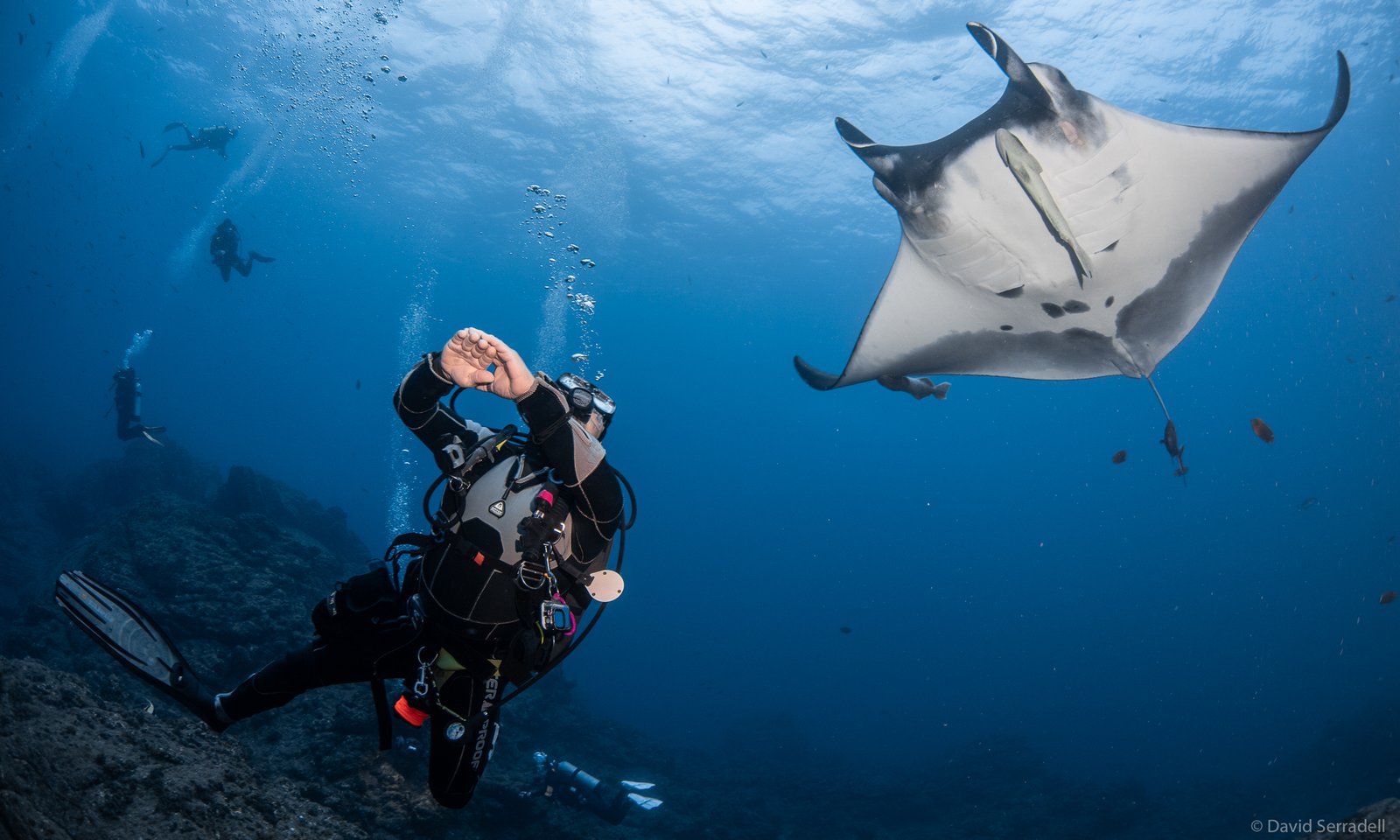
Hey there, fellow ocean lover. Picture this: You’re drifting along a sun-dappled reef, bubbles rising lazily from your regulator, when a massive shadow eclipses the light above. It’s a manta ray, wings unfurling like a living kite, circling closer with that curious tilt of its head. My first encounter like that, off the coast of Hawaii back in 2012, left me frozen in awe—heart pounding, fins forgotten. These gentle giants aren’t just a bucket-list dive; they’re a reminder of how fragile our blue world is. As scuba divers, we’re on the front lines, witnessing their grace up close. But with populations plummeting, it’s on us to turn wonder into action. This guide dives deep into manta ray conservation, sharing what I’ve learned from years of logging dives and volunteering with local projects. Let’s keep those shadows dancing for generations to come.
Understanding Manta Rays: The Basics
Manta rays, those majestic filter-feeders of the sea, belong to the Mobulidae family, sharing distant roots with sharks. There are two main species: the reef manta (Mobula alfredi), typically topping out at 11 feet across, and the giant oceanic manta (Mobula birostris), which can stretch to 23 feet—bigger than most family sedans. They’re plankton munchers, using those horn-like cephalic fins to funnel tiny prey into their mouths, and they’ve glided through oceans for over five million years.
What sets them apart is their smarts; they boast the largest brain-to-body ratio among fish, making them as inquisitive as they are enormous. I’ve watched one pause mid-swim to “inspect” my dive light, like it was sizing up an old friend. But here’s the kicker: they mature slowly, around age 10, and birth just one pup every two to three years. That low reproductive rate means they can’t bounce back quickly from hits.
Spotting one feels like a gift, but understanding their world—tropical and subtropical waters rich in plankton—helps us protect it. Whether you’re a new cert or a hundred-dive vet, knowing these basics fuels the passion to conserve.
The Urgent Threats Facing Manta Rays
Manta rays are in trouble, folks. Classified as Vulnerable (reef) and Endangered (giant oceanic) by the IUCN Red List, their numbers have dropped up to 50% in some spots over the last decade. The big bad? Overfishing for gill plates, those cartilage filters falsely peddled in Asia as “cures” for everything from acne to ailments—despite zero science backing it and high toxin levels making them risky even for quacks.
Bycatch in nets and lines snags them too, often fatally, while boat strikes carve propeller scars across their backs. Climate change stirs the pot: warmer waters disrupt plankton blooms, their sole diet, and acidify oceans that bleach the reefs they call home. Tourism, if unchecked, adds stress—crowds chasing selfies can disrupt feeding or mating.
I once surfaced from a Bali drift dive to hear about a fresh entanglement nearby; it hit hard, turning excitement into resolve. These threats aren’t abstract—they’re shredding populations from the Maldives to Mexico. But awareness is the first weapon; arm yourself, and you’re already fighting back.
Targeted Fishing: The Gill Plate Trade
The gill plate trade exploded in the 2000s, driving fishermen to target mantas in places like Sri Lanka and Indonesia. One ray yields just a few pounds of plates, but the demand fetches thousands on black markets. Despite CITES Appendix II restrictions since 2014—requiring proof of sustainability—illegal catches persist, decimating local groups.
In the Indian Ocean, fisheries have halved reef manta sightings. It’s heartbreaking; these rays, worth $1 million alive in tourism per individual over a lifetime, get reduced to trinkets. Divers, we’ve got leverage—boycott gill plate products and push for enforcement.
Bycatch and Entanglements
Even non-target fisheries snag mantas in gillnets or purse seines, common in tuna ops. They drown or drag gear for miles, weakening and injuring. In the Pacific, bycatch accounts for 20-30% of deaths, per NOAA data.
Entanglements from mooring lines or lost fishing gear are sneaky killers—mantas can’t back up, so they’re trapped. I’ve helped untangle one off Komodo; the relief in its glide away still chokes me up. Simple fixes like weighted lines help, but global gear tracing is key.
Habitat Loss and Climate Impacts
Rising seas and acidification erode reefs, manta hangouts for cleaning and resting. Plankton shifts from warmer currents mean longer migrations, exposing them to more risks. In Raja Ampat, coral bleaching has cut aggregation sites by 15%.
It’s a slow burn, but devastating. Divers see it firsthand—fewer spots, sparser schools. Supporting reef restoration plants the seeds for hope.
Global Conservation Efforts: Wins and Work Ahead
From grassroots to treaties, manta conservation has notched victories, but the fight’s far from over. The 2011 CMS listing flagged their migratory needs, while CITES in 2013 curbed trade—leading to bans in 30+ countries, including Indonesia’s massive no-take zone covering 2 million square kilometers.
NGOs like the Manta Trust and Marine Megafauna Foundation lead with research: satellite tagging tracks migrations, photo-ID catalogs individuals (over 6,000 in the Maldives alone). NOAA’s 2018 ESA threatened listing for giant mantas mandates recovery plans, including bycatch tech trials.
Local heroes shine too—Raja Ampat’s community patrols have boosted populations 20% since 2010. Yet gaps loom: enforcement lags in Asia, and climate demands bolder action. It’s progress, laced with urgency, and divers like us amplify it.
Key Organizations Driving Change
- Manta Trust: Pioneers in policy and education, they’ve secured protections in fishing hotspots. Their #SaveTheMantas campaign pushes for full trade bans—join via donations or social shares.
- Marine Megafauna Foundation: Focuses on science; Dr. Andrea Marshall’s PhD work uplisted the giant manta to Endangered. Their tagging reveals depth dives up to 1,000 meters, informing MPAs.
- NOAA Fisheries: U.S.-led recovery outlines target bycatch; report sightings to [email protected] for citizen science.
These groups turn data into deeds. I’ve donated dive trip fees to Manta Trust—small ripples, big waves.
Success Stories from Protected Areas
Raja Ampat’s holistic approach—community buy-in, no-fishing zones—saw reef mantas surge, with pregnancy rates double the Indo-Pacific average. In the Maldives, tourism revenue ($140M yearly) funds patrols, stabilizing the world’s largest reef manta pop.
Mexico’s Revillagigedo Archipelago, a UNESCO site, cut illegal fishing 40% via Navy enforcement. These tales prove protection pays; mantas thrive when we step back.
How Scuba Divers Can Make a Real Difference
You don’t need a PhD to help—your fins are your superpower. Start in-water: Follow the Manta Trust’s Code of Conduct—no chasing, touching, or flash photography. Maintain 3 meters distance; let them lead the dance. I’ve skipped “manta feeds” that bait with plankton; ethical encounters last longer in memory.
Choose operators wisely—vet for small groups (max 6 divers) and eco-fees supporting locals. Report violations via apps like Manta Matcher. On land, amplify: Share sightings on Manta Trust’s portal for ID databases, or volunteer on cleanups.
Humor me: Next time a manta “inspects” you, whisper thanks—and pledge to protect its path. We’re not just visitors; we’re guardians.
In-Water Best Practices
Approach from the front or side, never above—blocks their view and stresses them. No gloves or jewelry; skin contact strips protective mucus, inviting infections.
- Stay neutral buoyant to avoid silt stir-up.
- Limit time: 30 minutes max per site.
- Lights only if needed; dim for night dives.
These tweaks turn dives into data points for conservation.
Choosing Sustainable Dive Operators
Look for PADI Green Star or Project AWARE certified shops. In Hawaii, Manta Ray Advocates’ greenlist flags ethical tours—no night lights luring mantas.
| Operator Type | Pros | Cons | Best For |
|---|---|---|---|
| Eco-Resort Based | Easy access, education programs | Higher cost | Beginners wanting comfort |
| Liveaboard | Remote sites, fewer crowds | Seasickness risk | Advanced divers chasing aggregations |
| Local Community Ops | Funds direct to protection | Variable gear quality | Ethical, immersive trips |
Prioritize those donating to MMF or tracking impacts—your booking builds resilience.
Citizen Science: Log Your Sightings
Snap belly photos for unique spot patterns—each ray’s fingerprint. Upload to Manta Matcher; one log helped map Gulf of Mexico nurseries.
Pros of participating:
- Contributes to pop estimates.
- Tracks threats like scars.
Cons: Privacy for rays (no geo-tags publicly).
It’s easy science—dive, document, defend.
Top Dive Spots for Ethical Manta Encounters
Craving that manta magic without the guilt? These spots blend thrill with stewardship. The Maldives’ Hanifaru Bay (snorkel-only) hosts cyclone feeds of 200+ rays, fees funding conservation. Socorro Islands’ Roca Partida sees oceanic giants somersaulting in currents—November-May peak.
Raja Ampat’s Manta Sandy cleans 100+ weekly; community-led tours ensure low impact. Off Kona, Hawaii, night dives draw residents, but cap groups at 4.
I’ve hit most—Komodo’s Manta Point felt like flying alongside angels. Book smart: Check Bluewater Dive Travel for vetted trips.
Comparison: Reef vs. Oceanic Manta Hotspots
| Destination | Species Focus | Best Season | Conservation Highlight | Dive Difficulty |
|---|---|---|---|---|
| Maldives (Baa Atoll) | Reef | Jun-Oct | UNESCO site, tourism bans fishing | Beginner-Intermediate |
| Socorro, Mexico | Oceanic | Nov-May | Revillagigedo MPA, bycatch patrols | Advanced (currents) |
| Raja Ampat, Indonesia | Both | Nov-Apr | Largest no-take zone, pop growth 20% | Intermediate |
| Nusa Penida, Bali | Reef | Jul-Oct | Mola-manta combo, entanglement rescues | Advanced drift |
| Kona, Hawaii | Reef | Year-round | Night dive regs, citizen ID programs | Beginner |
Pick based on skill— all reward with wonder.
Pros and Cons of Manta Tourism
Manta tourism’s a double-edged fin: It generates $140M yearly, outpacing fishing value 100-fold, incentivizing protections. Divers like us spread awareness, funding NGOs via fees.
But unchecked crowds harass—over 1,000 daily in peak spots stress rays, cutting residency. Pros:
- Economic shift from harvest to watch.
- Funds research (e.g., tagging).
Cons:
- Prop strikes up 30% in hotspots.
- Baiting alters behavior.
Balance it: Opt for certified ops, and tourism tips the scales right.
People Also Ask: Common Queries on Manta Conservation
Drawing from real Google searches, here’s the scoop on what folks wonder most.
Why are manta rays endangered?
Primarily overfishing for gill plates and bycatch, plus habitat loss from climate change. Populations have declined 30-50% globally since 2000, per IUCN. Their slow reproduction— one pup every 2-3 years—can’t keep up.
How can I help protect manta rays as a diver?
Follow no-touch codes, choose eco-operators, and report sightings to Manta Trust. Avoid gill plate souvenirs; your dive dollars fund patrols if spent wisely.
What is the best place to see manta rays?
Maldives for reef mantas in massive feeds, or Socorro for playful oceanics. Year-round options abound, but ethical spots like Raja Ampat shine for conservation ties.
Are manta rays friendly to humans?
They’re curious, not aggressive—no stings or teeth. They often approach divers, but respect space to avoid stress. Think mutual admiration society.
How long do manta rays live?
Up to 40 years in the wild, reaching maturity at 8-10. That’s why threats hit hard; one lost ray echoes for decades.
FAQ: Your Manta Questions Answered
Based on diver forums and searches, here are five burning queries with straight talk.
Q: Is scuba diving with manta rays safe?
Absolutely, if you’re certified and follow guides. Mantas are harmless filter-feeders—no attacks recorded. Stick to 30-100 feet depths, watch currents, and you’re golden. My 50+ dives: zero scares, all thrills.
Q: How do I identify a reef manta vs. oceanic?
Reef mantas have diamond-shaped tails without barbs, max 11 feet; oceanics sport long tails, up to 23 feet. Belly spots are unique—snap ’em for science!
Q: What’s the impact of night dives on mantas?
Lights attract plankton (and mantas), but overuse disrupts feeding. Opt for red lights, small groups. In Hawaii, regs limit to 4 divers—keeps it chill.
Q: Can I volunteer for manta conservation?
Yes! Manta Trust offers internships in Maldives; MMF needs photo analysts remotely. Start local: Beach cleanups or Project AWARE dives. I logged hours untangling gear—rewarding AF.
Q: How does tourism help or hurt manta rays?
Helps via revenue ($1M/ray lifetime value) for MPAs; hurts if overcrowded. Choose operators donating 10%+ to funds—turns your trip into their shield.
Wrapping Up: Dive In, Give Back
We’ve covered the wonders, woes, and ways forward for manta ray conservation— from gill plate busts to your next ethical drift dive. Remember that Hawaiian shadow? It’s why I log sightings, pick green ops, and nudge buddies toward Manta Trust donations. These rays aren’t just sights; they’re ocean heartbeat, cycling nutrients and inspiring awe. As divers, we’re eyewitnesses with influence—let’s wield it lightly, lovingly.
Next plunge, channel that connection: Glide respectful, log the magic, spread the word. The sea whispers thanks in wingbeats. What’s your first manta story? Share below—together, we’re the tide-turners. Safe bubbles.