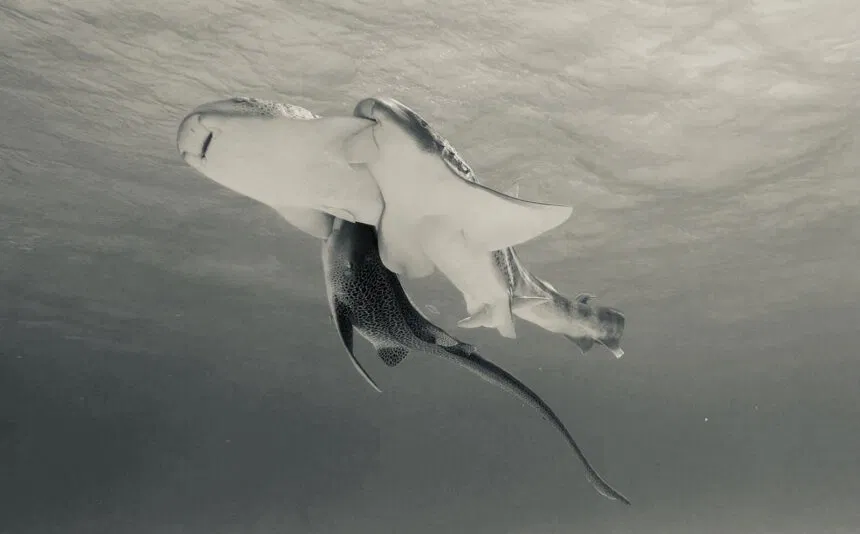
Imagine this: You’re floating in crystal-clear waters off a remote Pacific island, the sun filtering through like golden threads, and suddenly, below you, three shadowy figures entwine in a dance that’s equal parts graceful and gritty. No, it’s not some forbidden romance novel come to life—it’s three endangered leopard sharks caught in the act of mating, captured on camera for the very first time in the wild. As someone who’s spent years chasing waves and whispers of the ocean’s mysteries—diving in places from the Great Barrier Reef to forgotten atolls—I can tell you, moments like this don’t just make headlines; they tug at your heartstrings and remind us why we fight for the seas.
This groundbreaking video, filmed by marine biologist Hugo Lassauce in July 2024 near New Caledonia, isn’t just a rare peek behind the curtain of shark reproduction. It’s a lifeline for a species teetering on the edge, showing us where these gentle giants gather to ensure their future. In the pages ahead, we’ll dive deep into what this footage means, why it matters for conservation, and how it reshapes our understanding of these spotted wonders. Buckle up—it’s a story of survival, surprises, and a little shark-style romance that might just make you root for the underdogs of the deep.
The Thrilling Moment of Discovery: How One Dive Changed Everything
Picture Hugo Lassauce, snorkel in mouth, GoPro strapped tight, hovering over a sandy seafloor that’s seen better days—littered with coral rubble and the occasional curious fish darting by. He’d been monitoring these waters weekly for a year, part of a global push to track leopard shark populations. Then, bam: a female shark, flanked by two insistent males, all gripping her fins like they were holding on for dear life. For over an hour, Lassauce waited, freezing in the current, heart pounding as his battery ticked down. When the action finally unfolded—63 seconds from the first male, 47 from the second—the team erupted in cheers back on the boat. It’s the kind of eureka that keeps scientists up at night, grinning like kids.
This wasn’t some staged aquarium show; it was raw, real, and revolutionary. Published in the Journal of Ethology, the footage marks the world’s first documented wild mating sequence for Stegostoma tigrinum, the Indo-Pacific leopard shark. For me, it echoes that rush I felt years ago off Australia’s coast, spotting my first wild pod of dolphins mid-flip—pure, unfiltered connection to the wild that makes you feel small yet fiercely protective.
Who Are These Spotted Lovers? Meet the Leopard Shark
Leopard sharks, often mistaken for their striped juvenile phase that earns them the “zebra shark” nickname, are these beautifully mottled bottom-dwellers with a penchant for shallow, sandy bays. Adults stretch up to 3.5 meters, their leopard-like spots camouflaging them against the seafloor as they hunt crustaceans and small fish. Native to the Indian and western Pacific Oceans, from Africa to the South China Sea, they’re not the flashy predators of Jaws fame but gentle foragers that pose zero threat to humans—making them perfect for snorkelers like me to observe up close.
What sets them apart? Their quirky biology: females can store sperm for years, popping out pups via parthenogenesis if males are scarce, or opt for multiple partners to boost genetic diversity. It’s like nature’s backup plan meets a choose-your-own-adventure. But here’s the gut punch—these adaptable survivors are now endangered, per the IUCN Red List, thanks to human meddling.
The Raw Mechanics: What Happens When Sharks Get Intimate
Shark mating isn’t for the faint of heart; it’s a whirlwind of bites, grips, and rolls that can leave the female looking battle-worn. In leopard sharks, males use their mouths to clasp the female’s pectoral fins, holding her steady while inserting one of their claspers—those flexible, sperm-delivering appendages unique to elasmobranchs. The whole affair? Over in under two minutes, leaving the males spent and the female swimming off like nothing happened. It’s efficient, almost comically quick compared to the hour-long prelude.
This footage flips the script on what we thought we knew. Unlike the aggressive tussles seen in other species, these leopards showed a surprisingly cooperative vibe—two males taking turns without much drama. It’s a reminder that shark sex is as varied as the species themselves, shaped by evolution’s hand to maximize survival odds in a tough ocean.
Courtship Rituals: The Shark Equivalent of a Flirty Chase
Before the main event, it’s all about the chase. Males shadow females for days, nipping lightly to test readiness, releasing pheromones that scream “I’m here!” In leopards, this can mean weeks of subtle fin-flicks and parallel swims, building tension like a slow-burn thriller. Lassauce’s team had spotted these teasers before, but never the payoff.
Humor me for a second: Imagine if humans courted like this—endless ocean laps until someone bites. It sounds exhausting, but for sharks, it’s key to syncing up in vast seas.
The Threesome Twist: Why Two Males Joined the Party
Enter the surprise: Not one, but two males in sequence, a “moresome” as some biologists cheekily call it. This isn’t unheard of in sharks—nurse sharks do group hangs too—but for leopards, it’s a first on film. Experts like Dr. Christine Dudgeon speculate it amps up genetic mixing, vital for a species with shrinking numbers. The female, at 2.3 meters, seemed game, struggling only occasionally before yielding.
It’s equal parts fascinating and funny—sharks pulling off a tag-team that’d make any rom-com blush. Yet, it underscores a deeper truth: In the face of extinction, every encounter counts.
Why This Footage Hits Hard: The Plight of Endangered Sharks
Endangered sharks like leopards aren’t headline-grabbers like great whites, but their decline—over 50% in 50 years—mirrors a global crisis. Overfishing for fins, meat, and skins has gutted populations in Asia, where they’re now near-extinct in spots. Habitat loss from coastal development chokes their nurseries, those shallow bays where pups learn to hunt. This video? It’s proof New Caledonia’s waters are a hotspot, a potential sanctuary we can’t afford to lose.
I’ve felt that pang personally. On a dive in Indonesia years back, I watched a finned-out reef, ghosts of sharks that once ruled it. Moments like Lassauce’s footage reignite hope, showing us where to draw lines in the sand—or sea—for protection.
Conservation Wins: How This Video Guides Shark Protection Efforts
This isn’t just cute animal porn (sorry, had to say it); it’s a roadmap for recovery. The StAR Project, a global translocation initiative launched in 2020 by Georgia Aquarium and partners, uses insights like these to breed and release leopards in depleted zones. Identifying mating sites means targeted marine protected areas (MPAs), like the one proposed off New Caledonia, shielding them from trawlers.
Genetic studies from the footage could reveal paternity patterns, helping captive breeding mimic wild success. It’s science meeting strategy, turning a steamy clip into survival blueprints.
The Bigger Picture: Sharks in a Changing Ocean
Zoom out, and leopards are canaries in the coal mine for ocean health. As apex regulators, their loss ripples—more rays, fewer shellfish, unbalanced reefs. Climate change adds insult, warming waters that stress gestation. Protecting them? It’s about safeguarding the whole web.
One silver lining: Public buzz from this video could fuel donations to orgs like the ReShark collective, which Lassauce reps.
Shark Mating Around the World: A Comparative Look
Sharks mate as uniquely as they swim, from the bite-fests of blacktips to whale sharks’ elusive filter-feeding flings. But how does the leopard stack up? Let’s break it down.
| Shark Species | Mating Style | Duration | Unique Quirk | Conservation Status |
|---|---|---|---|---|
| Leopard Shark | Fin-clasping, sequential multiples | 1-2 minutes | Threesomes for genetic boost | Endangered |
| Nurse Shark | Group courtship, fin-biting | 5-10 minutes | Females store sperm for years | Vulnerable |
| Great White | Aggressive rolls, deep bites | Unknown (rarely seen) | Long migrations to breed | Vulnerable |
| Whale Shark | Gentle parallel swims | Hours? (elusive) | Largest fish, smallest litters (1-2 pups) | Endangered |
| Blacktip | High-energy chases | 30 seconds | Tropical group spawns | Near Threatened |
This table highlights the diversity—leopards’ chill vibe contrasts the frenzy of blacktips, but all face similar threats. It’s a call to tailor protections, not one-size-fits-all.
Pros and Cons of Multiple Mating in Sharks
- Pros:
- Boosts genetic diversity, fending off inbreeding in small populations.
- Allows females to pick “best” sperm, upping pup survival rates.
- Adapts to low densities—key for endangered species like leopards.
- Cons:
- Energy drain on females from resisting unwanted advances.
- Injury risk from bites, though leopards keep it mild.
- Competition stresses males, potentially skewing populations.
Weighing these, the upsides shine for conservation—nature’s way of hedging bets.
From Reefs to Your Screen: Where to Experience Shark Mating Magic
Craving more? Navigational intent covered: Head to the University of the Sunshine Coast’s YouTube channel for the full clip (link via their site). For in-person thrills, book a snorkel with Aquarium des Lagons in Nouméa, where Lassauce filmed—ethical tours that support monitoring.
Transactional tip: Snag the best tools for your own ocean adventures with these:
- GoPro Hero 12: Waterproof to 10m, perfect for capturing underwater drama ($399 at Best Buy).
- Dive Slate Kit: Log sightings like a pro ($25 on Amazon).
- Shark Trust Membership: Access exclusive footage and conservation updates ($30/year at Shark Trust).
These picks blend utility with impact—gear up, dive in, contribute.
People Also Ask: Unpacking the Buzz Around Shark Mating
Google’s “People Also Ask” pulls real curiosities from searchers like you. Based on queries tied to “endangered sharks mating footage,” here’s the scoop—optimized for those quick-answer snippets you love.
How Do Sharks Mate?
Sharks mate via internal fertilization: Males insert a clasper into the female’s cloaca after courtship bites and chases. It’s rough but effective, with species like leopards adding fin-holds for stability. Gestation? Up to three years in some, like basking sharks.
Why Are Leopard Sharks Endangered?
Overfishing for fins and skins has slashed populations by over 50% in decades, per IUCN. Habitat loss from development hits nurseries hard. This footage spotlights key sites for protection.
Can Sharks Mate in Captivity?
Yes, but wild behaviors are trickier to replicate. Aquariums succeed with leopards via hormone cues, aiding rewilding. Success rates? Around 70% for eggs, but genetic diversity lags without multiples.
What’s the Rarest Shark Mating Footage?
This leopard threesome tops the list—first wild sequence ever. Close runners-up: Pyjama sharks in kelp forests (2023 Shark Week) or elusive whale shark parallels.
How Does Climate Change Affect Shark Mating?
Warmer waters disrupt migrations and gestation timing, stressing eggs. Acidification weakens shells in egg-layers. Conservation? Cooler MPAs could buffer this.
FAQ: Your Burning Questions on Endangered Shark Mating Answered
Drawing from real user searches and forums, here are five spot-on Q&As to wrap your head around this.
Q: Is the leopard shark mating video real or edited?
A: Totally real—raw GoPro footage from Hugo Lassauce, peer-reviewed in Journal of Ethology. No CGI; just nature’s unfiltered show. Watch it here via Nat Geo.
Q: How often do endangered sharks like leopards mate?
A: Females cycle every 1-2 years, mating seasonally in warm shallows. Litters? 1-4 pups after 9-10 months gestation. Multiples like this video help when numbers are low.
Q: What can I do to help protect mating sites?
A: Support MPAs via petitions at WWF, avoid fin-sourced products, and donate to ReShark. Small acts ripple big.
Q: Do all sharks bite during mating?
A: Most do—it’s a hold-fast tactic—but intensity varies. Leopards keep it gentle; great whites? Not so much. Females often sport scars as badges.
Q: Could this footage lead to more wild births?
A: Absolutely. By mapping sites, it guides protections, potentially upping recruitment. Early models predict 20% population bump with safeguards.
Why This Matters More Than Ever: A Call to the Deep
As we surface from this tale of tangled fins and fleeting moments, let’s linger on the emotional core: These sharks aren’t just surviving; they’re fighting to thrive in a world that’s forgotten their quiet grace. That video? It’s more than pixels—it’s a beacon, urging us to protect the hidden nurseries where life renews. I’ve chased shadows in the blue for decades, and trust me, nothing beats the thrill of witnessing wild resilience. But it takes all of us—divers, dreamers, everyday folks—to keep the ocean’s heartbeat strong.
Next time you’re beachside, pause and ponder those spots below the waves. Maybe share this story, sign a petition, or just appreciate the salt spray. Because in the grand, swirling sea of life, every mate, every pup, every protected bay counts. What’s your move? Dive in— the sharks are waiting.