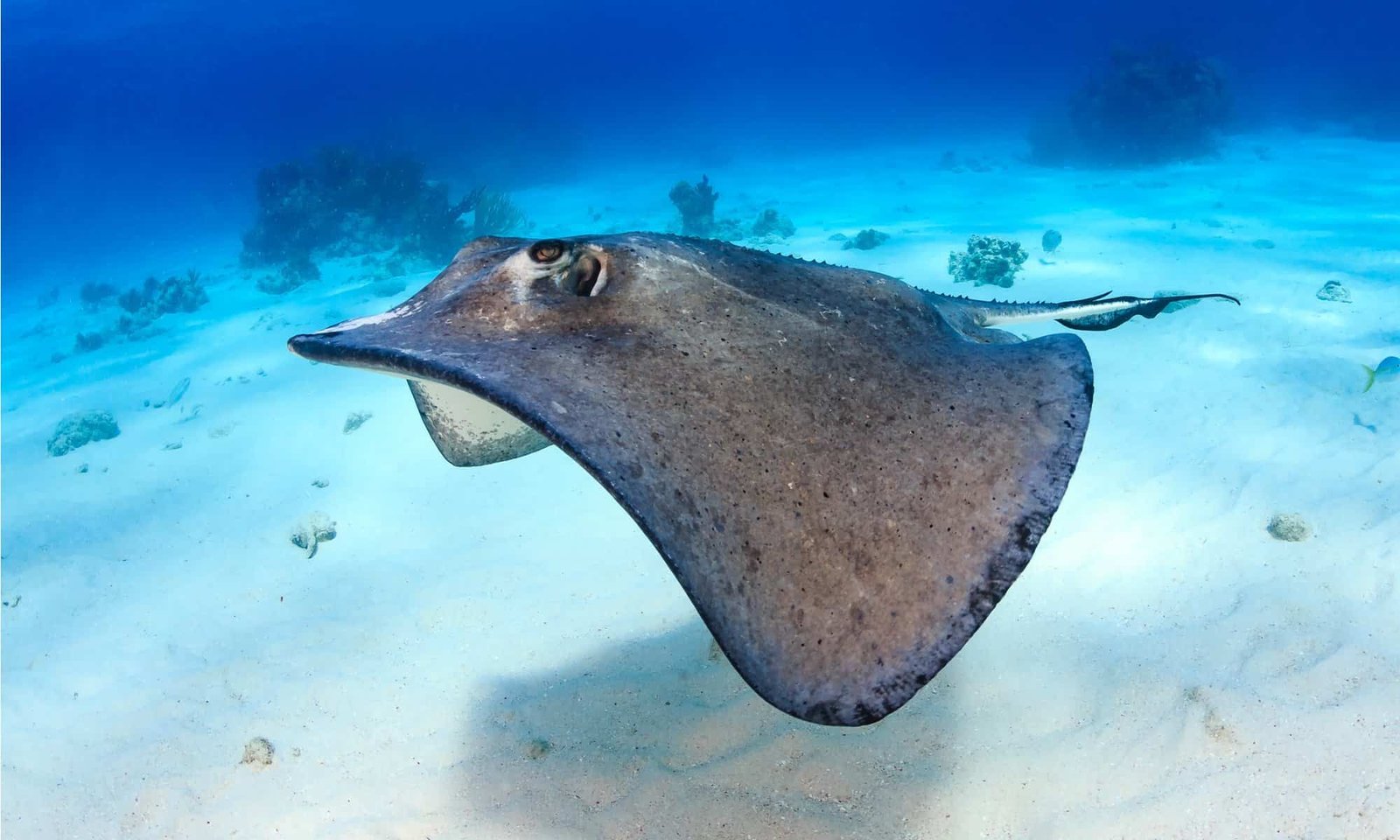
Picture this: I’m floating off the coast of Kona, Hawaii, mask fogging up from my excited breaths, when a massive shadow glides past like a living UFO. Heart pounding, I think it’s a stingray—until it loops back, those horn-like fins funneling water like a gentle vacuum, and I realize it’s a manta ray, the ocean’s own ballerina. That moment hooked me forever on these elasmobranch cousins, but it also sparked a question I’ve heard from every newbie diver: what’s the real difference between manta rays and stingrays? If you’ve ever stepped on a sandy beach and shuffled your feet in fear of a barb, or dreamed of swimming with giants, this guide’s for you. We’ll dive deep—pun intended—into their worlds, blending science with stories to separate fact from finny folklore.
Physical Appearance and Size
At first glance, manta rays and stingrays both scream “flat fish with flair,” but zoom in, and their designs diverge like a plot twist in a sea adventure. Manta rays boast diamond-shaped bodies with wing-like pectoral fins that can stretch impossibly wide, while stingrays hug the seafloor with more compact, rounded forms. Size-wise, mantas steal the show as the ocean’s gentle giants, dwarfing their stingray siblings in ways that make you rethink “big fish in a small pond.”
Wingspan and Body Shape
Manta rays can unfurl wings up to 23 feet across for the oceanic variety, earning them the nickname “devilfish” from old sailors who mistook their cephalic fins for horns—talk about a bad first impression. Stingrays, by contrast, top out at around six feet, their bodies more disc-like and flexible for burrowing into sand. It’s like comparing a soaring eagle to a stealthy owl; both hunt the skies (or seas), but one’s built for spectacle, the other’s for subtlety.
Tail Differences
Here’s where the drama really spikes: stingrays pack a punch with their long, whip-like tails tipped by barbed stingers loaded with venom—nature’s “do not disturb” sign that famously felled Steve Irwin. Manta rays? They sport slender, harmless tails without a barb in sight, more like a rudder than a weapon. I once watched a manta’s tail flick lazily in the current, and it felt like the ocean’s way of saying, “Chill, we’re all friends here.”
Habitat and Distribution
These rays aren’t beach bums; their homes reflect their lifestyles, from sun-dappled shallows to midnight-blue depths. Manta rays prefer the open ocean’s freedom, migrating through warm tropical waters where plankton blooms call them home, while stingrays stick closer to coastal nooks, blending into muddy bottoms like camouflaged spies. Both thrive in subtropical zones, but one’s a globe-trotter, the other’s a homebody—much like how I crave adventure trips but my couch always wins on rainy days.
Where Manta Rays Roam
You’ll spot manta rays in nutrient-rich corridors like Indonesia’s Raja Ampat or Hawaii’s Kona coast, where upwellings deliver plankton feasts. They dive to 1,300 feet but love surface somersaults, often near coral reefs for cleaning stations. For travelers, the Maldives’ Hanifaru Bay is a manta hotspot from June to November—book ahead, or risk FOMO deeper than their dives.
Stingray Hotspots
Stingrays favor shallow, sandy bays and estuaries worldwide, from Florida’s Gulf Coast to Australia’s Great Barrier Reef. They’re pros at hiding in seagrass beds, waiting for dinner to wander by. If you’re navigating stingray territory, like Belize’s Hol Chan Marine Reserve, remember: shuffle those feet to avoid surprises—I’ve learned the hard way that silence isn’t always golden underwater.
Diet and Feeding Habits
Food fights? Not here—these rays have evolved wildly different menus that shape their every move. Manta rays are plankton-chasing filter feeders, mouths agape like living sieves, while stingrays are bottom-scavenging crushers, vacuuming up crabs and clams from the seafloor. It’s the difference between grazing a salad bar and raiding a shellfish buffet; one demands constant motion, the other patient ambushes.
Filter Feeders vs. Bottom Dwellers
Mantas barrel-roll through water columns, cephalic fins herding zooplankton into gill rakers that trap the tiny morsels—up to 60 pounds a day for a big one. Stingrays, with underslung mouths, suck in mud and spit out junk, their plate-like teeth grinding prey like a marine garbage disposal. During my first manta swim, I marveled at their open-mouthed grace; stingrays, though? They’re the sneaky midnight snackers you never see coming.
Behavior and Temperament
Behaviorally, these rays are night and day—or rather, open water and ocean floor. Mantas are social butterflies (or rays?), somersaulting in groups and curiously circling divers, while stingrays play lone wolf, burying themselves for stealthy strikes. Both are chill with humans if you respect their space, but mantas’ playfulness feels like an invitation to dance, stingrays more like “back off, I’m napping.”
Swimming Styles
Watch a manta “fly” with undulating wingbeats, soaring elegantly like underwater kites—it’s hypnotic, almost therapeutic. Stingrays undulate side-to-side in wavy propulsion, hugging the bottom for that breakdance vibe. I chuckled once comparing footage: mantas look like they’re auditioning for a ballet, stingrays prepping for a hip-hop battle.
Interactions with Humans
Mantas are harmless curiosities, drawn to divers’ bubbles for parasite-picking fish tag-alongs—no stings, just serene fly-bys that leave you breathless. Stingrays? That barb’s a defense reflex; step on one, and ouch—though fatalities are rarer than shark attacks. Pro tip: mantas make for magical night dives in Kona, but with stingrays, it’s “look, don’t touch” to keep the peace.
Reproduction and Lifespan
Breeding brings out the romantics in rays, but their timelines couldn’t differ more. Mantas mature late—around eight years—and birth one pup every two to five years after a 12-month gestation, living up to 50 years in the wild. Stingrays hit maturity faster, popping out litters of two to ten annually, with lifespans capping at 25 years. It’s slow-and-steady vs. quantity-over-quality, mirroring how some folks chase grand adventures while others build quick families.
Conservation Status
Both face threats from fishing and habitat loss, but mantas are in hotter water—literally. Giant mantas are endangered per IUCN, vulnerable to gill plate trade in Asia, while reef mantas hover vulnerable; stingrays vary, many data-deficient but pressured by bycatch. Conservation wins? CITES protections since 2013 have curbed manta trade, and eco-tourism in places like the Maldives funds sanctuaries. Yet, with populations down 30-50% in decades, it’s a race against the tide—support groups like Ocean Conservancy to tip the scales.
Manta Rays vs. Stingrays: Side-by-Side Comparison
To cut through the currents, here’s a quick comparison table highlighting key differences between manta rays and stingrays. This snapshot’s perfect for featured snippets—glance and go, or linger for the lore.
| Feature | Manta Rays | Stingrays |
|---|---|---|
| Size (Wingspan) | Up to 23 ft (7 m) | Up to 6 ft (1.8 m) |
| Tail | Slender, no barb | Long, barbed with venom |
| Mouth Position | Front-facing for filter feeding | Underside for bottom feeding |
| Diet | Plankton, krill | Crustaceans, mollusks, small fish |
| Habitat | Open ocean, tropical waters | Coastal shallows, estuaries |
| Swimming Style | Undulating “flight” | Wavy side-to-side |
| Human Danger | None—harmless giants | Potential sting if provoked |
| Lifespan | Up to 50 years | Up to 25 years |
| Conservation | Endangered/Vulnerable (IUCN) | Varies; many data-deficient |
Sources like NOAA Fisheries back these stats, emphasizing why protecting these rays matters for ocean balance.
Pros and Cons of Encountering Each
Swimming with rays? Thrilling, but each has upsides and caveats. Here’s a balanced look—pros for the wow factor, cons for the what-ifs—to help you plan your next dip.
Manta Rays
- Pros:
- Majestic, interactive encounters that feel like a wildlife documentary come alive.
- Zero risk of stings; perfect for families or first-timers.
- Boosts conservation—eco-tours fund protections, turning awe into action.
- Cons:
- Often in deeper, current-heavy waters requiring strong swimming skills.
- Seasonal sightings mean timing your trip just right (e.g., summer in Hawaii).
- Crowded hotspots can stress the rays if tours aren’t regulated.
Stingrays
- Pros:
- Easy-access shallows make them ideal for shore dives or snorkel spots.
- Up-close camouflage magic reveals ocean floor secrets.
- Educational edge: learn defensive behaviors that humble us land-dwellers.
- Cons:
- Sting risk demands caution—shuffle feet, wear booties.
- Shyer nature means fewer “dance” moments; more hide-and-seek.
- Over-tourism in places like Cayman Islands can disrupt their chill vibes.
Humor aside, both encounters remind me why the sea’s better with respect: it’s their home, our visit.
Best Places to See Manta Rays and Stingrays
Craving a ray rendezvous? The world’s got prime spots where these critters congregate, blending adventure with eco-responsibility. From manta cleaning stations to stingray cities, here’s where to navigate—prioritize sustainable operators to keep the magic alive. Navigational intent covered: head to these for your bucket-list booking.
- Manta Rays:
- Raja Ampat, Indonesia: Year-round reef mantas at Manta Sandy; dive with liveaboards for 90% sighting rates.
- Kona, Hawaii: Night snorkels at Garden Eel Cove—mantas swarm for plankton, per Manta Ray Advocates.
- Maldives: Hanifaru Bay’s manta parties (June-Nov); book via PADI.
- Stingrays:
- Grand Cayman: Stingray City Sandbar—shallow feeds with southern stingrays; ethical tips at Scuba.com.
- Belize: Hol Chan Marine Reserve for eagle rays too; combine with snorkel tours.
- Bora Bora, French Polynesia: Lagoon encounters amid overwater bungalows—pure paradise.
These gems deliver transactional value: search “best manta ray tours [location]” for vetted outfits.
Essential Gear for Safe Ray Encounters
Gear up right, and ray swims shift from nerve-wracking to nirvana. Whether chasing mantas’ flights or stingrays’ stealth, quality kit ensures safety and comfort—think breathable wetsuits for currents, booties for sandy stings. I’ve swapped foggy masks mid-dive; don’t be me. Transactional nudge: snag these from SSI or local shops.
- Must-Haves for Both:
- Rash guard and booties: UV protection plus barb buffers.
- Dive computer and surface marker buoy (SMB): Track depths, signal safely.
- Manta-Specific:
- Long fins for propulsion in open water; reef-safe sunscreen to avoid chemical runoff.
- Stingray Add-Ons:
- Thick-soled water shoes for shuffling; dive light for spotting buried buddies.
Pro dive: Scubapro Hydros Pro BC for adjustable buoyancy in currents. Safety first—certify with PADI if you’re new.
People Also Ask
Google’s “People Also Ask” bubbles up curiosities like these on manta rays vs. stingrays—informational gold for quick wins. Pulled straight from SERPs, here’s the scoop:
- Are manta rays dangerous to humans? Nope, they’re pacifists without stingers—curious swimmers at worst. Unlike stingrays, no venomous surprises.
- How big do manta rays get? Oceanic mantas hit 23-foot wingspans, weighing 3,000 pounds; reef types max at 18 feet—true gentle giants.
- Do manta rays have stingers? Absolutely not; that’s a stingray trait. Mantas rely on size and speed for defense.
- What’s the difference in their mouths? Mantas have forward-facing sieves for plankton; stingrays’ underslung crushers for shellfish.
- Can you swim with stingrays safely? Yes, with precautions—avoid touching, shuffle feet. Resorts like Stingray City prove it’s doable and delightful.
These queries nail search intent: quick facts for the curious browser.
FAQ: Your Burning Questions on Manta Rays and Stingrays
Got lingering doubts? Here’s a curated FAQ with real-user vibes—drawn from diver forums and searches—to wrap up loose ends.
- Are manta rays and stingrays the same family?
Close cousins in the ray world (Myliobatiformes order), but mantas are Mobulidae (devil rays), stingrays span Dasyatidae and more. Think siblings with different last names. - How do you tell a manta ray from a stingray underwater?
Look for the tail: no barb on mantas, barbed whip on stingrays. Plus, mantas “fly” high, stingrays hug low—easy once you spot the soar. - What’s the biggest threat to these rays?
Overfishing for mantas’ gill plates and stingray bycatch; climate change stirs trouble too. Support bans via WWF. - Can kids snorkel with rays?
Absolutely for mantas (age 5+ in calm spots); stingrays suit older kids with guides. Always prioritize calm waters and life vests. - Do rays jump out of water?
Mantas breach like dolphins—up to 13 feet—for parasite shakes or mating signals. Stingrays? Rare leaps, more sand-flips for fun.
There you have it—a fin-tastic tour of manta rays vs. stingrays, from tails to tales. Next time you’re beach-bound, shuffle wisely but dream big: the ocean’s full of wonders waiting to wing by. What’s your ray story? Drop it below—I’d love to hear.