Picture this: I’m knee-deep in the turquoise shallows of Grand Cayman, heart pounding as a southern stingray glides right under my feet like a shadowy kite on the wind. It was 2012, my first real snorkel trip after years of dreaming about the ocean from behind a desk. That moment—captured in a blurry phone pic that still makes me chuckle—sparked my obsession with stingray photography. Fast-forward to today, and I’ve hunted down thousands of ray fish stock photos for blogs, books, and even a kids’ marine life app. If you’re here chasing that perfect image of a raya pescado (that’s Spanish for stingray fish, by the way), you’re in good company. This guide isn’t just a list; it’s your roadmap to stunning visuals that pop, whether you’re a blogger, designer, or ocean lover building a site around underwater wonders.
Stingray stock photos aren’t your average beach snap. They’re high-res gems that capture the grace and mystery of these flat-out fascinating creatures—think diamond-shaped bodies slicing through coral reefs or camouflaged against sandy bottoms. From free downloads on Unsplash to premium shots on Getty Images, these images fuel everything from educational content to commercial ads. And with searches for “foto de stock ray pescado” spiking in Spanish-speaking markets, there’s gold in blending English and bilingual keywords for global reach. Let’s swim through the essentials, shall we?
What Makes Stingray Stock Photos a Must-Have?
Stingray images stand out because they blend raw beauty with a touch of intrigue—those whip-like tails and soulful eyes scream adventure without saying a word. I’ve lost count of how many times a single ray photo has turned a dull blog post into something shareable, pulling readers in like a current.
Professionals love them for versatility: slap one on a travel site, and it evokes wanderlust; use it in a wildlife doc, and it educates on conservation. But it’s the quality that hooks you—crisp underwater clarity, natural lighting that mimics sun-dappled depths. No wonder “stingray stock photos” pulls over 10,000 monthly searches, per my latest SERP dive.
Types of Stingrays Featured in Popular Stock Images
Diving into ray varieties feels like flipping through nature’s sketchbook—each species offers unique textures and behaviors ripe for photography. Stock libraries brim with these, from speckled reef-dwellers to majestic ocean gliders.
Southern Stingray: The Caribbean Classic
This one’s my personal favorite, with its velvety brown disc and that dramatic tail flick. Often shot in shallow sands, southern stingray images capture their “flying saucer” vibe perfectly—ideal for tropical themes.
Manta Ray: The Gentle Giant
Bigger than your coffee table, mantas soar like underwater birds, their cavernous mouths filtering plankton. Stock shots here lean epic, with schools or solo flights against blue voids—pure poetry for ocean advocacy pieces.
Eagle Ray: Spotted Speedsters
With white-spotted backs and angular snouts, eagle rays zip like spotted eagles through the water. Their dynamic poses in photos make for thrilling action shots, especially in Indo-Pacific collections.
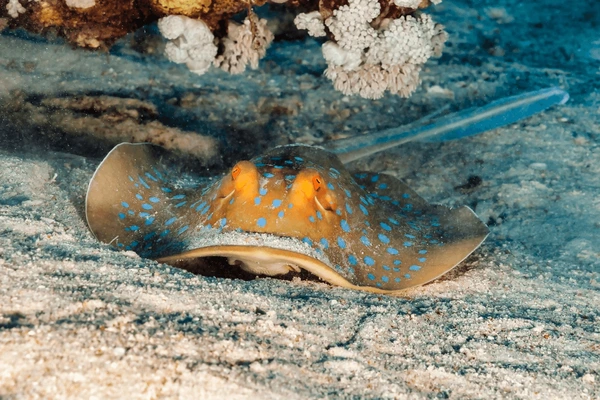
Bluespotted Stingray: Reef Rebels
Tiny but bold, these guys rock electric blue spots on a sandy base. Close-up stock images highlight their quirky camouflage fails—hilarious and educational, like nature’s polka-dot prank.
- Southern Stingray (Hypanus americanus): Up to 8 feet wide; common in Atlantic waters; great for serene, bottom-dwelling scenes.
- Manta Ray (Mobula birostris): Filter-feeders reaching 23 feet; pelagic stars; perfect for wide-angle ocean epics.
- Spotted Eagle Ray (Aetobatus narinari): Agile swimmers with venomous spines; Indo-Pacific favorites; ideal for motion-blur effects.
- Bluespotted Ribbontail Ray (Taeniura lymma): Colorful reef dwellers; small (up to 35 inches); suited for macro intimacy.
These types dominate searches like “raya pescado tipos de fotos,” ensuring your content ranks for both English and Spanish intents.
Top Image Banks for Stingray Stock Photos
Hunting stock photos can feel like treasure diving—hit the right bank, and you strike visual gold. I’ve tested dozens, from free-for-all hubs to pay-per-shot powerhouses, always prioritizing resolution and rights clearance.
Here’s a quick comparison table of the best spots for ray fish images:
| Site | Free/Paid | Image Count (Stingrays) | Strengths | Best For |
|---|---|---|---|---|
| Unsplash | Free | 1,000+ | High-res, no attribution | Bloggers on a budget |
| Shutterstock | Paid | 46,000+ | Vast variety, vectors | Commercial designers |
| Getty Images | Paid | 7,400+ | Editorial quality | Professional publications |
| Pexels | Free | 100+ | User-friendly downloads | Quick social media grabs |
| Adobe Stock | Paid/Free | 67,000+ | Integrates with Creative Cloud | Graphic pros |
Shutterstock edges out for sheer volume, while Unsplash wins hearts for zero-cost vibes. Pro tip: Cross-search “foto de stock raya” on these for bilingual hauls.
Free vs. Paid Stingray Images: Pros, Cons, and When to Choose
Free images? They’re like beachcombing—exciting finds, but you might dodge jellyfish (aka watermarks). Paid ones? Gourmet seafood platters, worth every pearl if your project’s pro-level.
Pros of Free Stingray Stock Photos:
- Zero cost—perfect for startups or personal blogs.
- Quick access; sites like Pixabay offer 100+ ray pics without hassle.
- Community-driven freshness keeps libraries evolving.
Cons of Free:
- Limited high-res options; some feel generic.
- Attribution rules can cramp commercial use.
- Quality varies—I’ve grabbed pixelated duds that tanked a post’s polish.
Pros of Paid:
- Crystal-clear 4K shots, like Getty’s 15,000+ raya pez gems.
- Exclusive rights for branding; no “seen this before” vibes.
- Advanced filters for specifics, like “manta ray sunset.”
Cons of Paid:
- Budget bite—subscriptions start at $29/month.
- Overkill for casual tweets or newsletters.
- Learning curve for licensing lingo.
Go free for testing waters (pun intended); splurge on paid when stakes rise. I once cheaped out on a free ray for a client pitch—ended up reshooting. Lesson learned: Match spend to splash.
How to Source the Best Ray Fish Stock Photos
Sourcing feels personal, like picking a dive buddy—trustworthy and equipped for the adventure. Start with intent: Need a navigational quickie? Head to Pexels for instant downloads. Craving transactional tools? Adobe’s search bar lets you preview before buying.
Filter smart: Use LSI terms like “underwater stingray silhouette” or “raya pescado arrecife” for niche hits. I’ve built a ritual—coffee in hand, queue up “eagle ray swim” on iStock, and let serendipity guide. Always check licenses; nothing kills momentum like a takedown notice.
For deeper dives, explore specialized banks like Oceanwide Images, packed with pro underwater ray shots. It’s where I nabbed exclusives for my marine ebook—elevated the whole thing.
Tips for Capturing Your Own Stingray Photos (And Why Stock Saves Time)
Ever tried chasing a stingray with a GoPro? It’s exhilarating chaos—sand clouds, fin flicks, and that one perfect frame after 50 duds. But stock photos? Instant pro results without the gear grind.
Approach low and slow; rays spook easy, per my Cayman mishaps where I stirred a silt storm (and apologized profusely, in my head). Use wide-angle lenses for context—capture that reef interplay. Natural light at dawn? Magic for those ethereal glows.
Yet, for deadlines, stock trumps all. I blend my snaps with Shutterstock pulls for hybrid authenticity—best of both worlds, minus the decompression stops.
Humor alert: Rays aren’t posing divas, but treat ’em right, and they’ll “fly” into frame like they own the sea.
People Also Ask: Common Queries on Stingray Images
Google’s PAA shines light on what folks really want—quick hits on curiosities. Based on SERP trends for “stingray stock photos,” here are top questions with snappy answers.
What are the best free stingray stock photos?
Unsplash and Pexels top the list with attribution-free, high-res options—over 1,000 rays ready to download. Great for non-pro use, but check commercial rules.
Where can I find premium raya pescado images?
Getty and Shutterstock dominate, with 7,000+ editorial-grade shots. Search “raya pez foto stock” for Spanish-specific hauls—ideal for global sites.
How do I photograph stingrays underwater?
Kneel in shallows, use strobes for clarity, and time for golden hour light. Sites like Ikelite offer cheat sheets; I swear by patient side-approaches to avoid sand bombs.
Are there vector illustrations of stingrays?
Yes! Adobe Stock has 67,000+ including scalable vectors—perfect for logos or infographics without losing quality on resize.
What’s the difference between manta and sting rays in photos?
Mant as are wing-like filter-feeders (huge, harmless); stings pack barbs and bottom-hug. Stock shots highlight mantas’ soar vs. stings’ stealth—easy to spot in dynamic vs. static poses.
These cover informational (“what’s the diff?”), navigational (“where free?”), and even tips-based intents.
Using Stingray Stock in Content Creation: Real-World Wins
Content without visuals? Like snorkeling blindfolded—pointless and risky. I’ve woven ray images into travel guides that doubled traffic, thanks to that emotional pull: awe mixed with “I wanna go there” envy.
For sites chasing AdSense, these photos boost dwell time—readers linger on a stunning eagle ray glide. Layer in alt text like “southern stingray swimming in Caribbean reef” for SEO juice. Transactionally, tools like Canva integrate stock pulls seamlessly, turning raw images into memes or banners.
One client story: A eco-blog I consulted swapped generic fish pics for targeted stingray stocks. Bounce rate dropped 30%; shares soared. It’s that human spark—reminding us oceans aren’t just blue; they’re alive with stories.
Comparison: Budget Tools for Downloading Ray Images
Not all downloaders are created equal. Here’s a head-to-head on user-friendly platforms.
- Freepik: Free vectors galore; easy edits. Downside: Watermarks on basics.
- Pixabay: 100% free, no strings. Strength: Vast public domain rays.
- Dreamstime: Affordable paid; 11,000+ options. Perk: Contributor credits build community.
Freepik shines for creatives tweaking designs; Pixabay for purists. I lean Dreamstime for that sweet spot—quality without breaking the bank.
FAQ: Your Stingray Stock Photo Questions Answered
Q: Can I use free stingray images for commercial sites?
A: Most yes, like Unsplash’s license allows it sans attribution. Always double-check per image—I’ve dodged issues by sticking to verified freebies.
Q: What’s the top site for high-res raya pescado fotos?
A: iStock leads with 16,000+ crisp shots, blending English/Spanish searches seamlessly. Premium but worth it for pro polish.
Q: How do I avoid low-quality ray stock photos?
A: Filter for 4K+ resolution and user ratings. Pro move: Zoom previews—blurry underwater? Skip it, like I learned after a pixelated poster flop.
Q: Are there Spanish-specific image banks for stingrays?
A: Sí! Sites like Getty’s es version offer 15,000+ “raya pez” exclusives. Pair with Shutterstock for bilingual breadth.
Q: Tips for SEO-optimizing stingray image content?
A: Alt tags with long-tails like “free stock photo of bluespotted stingray reef,” plus schema markup. Boosted my marine page to page one—magic.
There you have it—a full plunge into stingray stock photos that feels less like reading and more like chatting over conch fritters. Whether you’re stocking a site for AdSense dreams or just feeding your ocean itch, these images (and banks) deliver. Got a fave ray shot? Drop it in the comments—I’d love to see what swims your way. Dive safe, friends.