Hey there, fellow wanderer. Picture this: You’re floating in warm, emerald water, surrounded by a living cloud of golden orbs pulsing gently around you. No fear, no sting—just pure, surreal magic. That’s Jellyfish Lake for you, a hidden gem in the Pacific that feels like stepping into a dream. I’ve chased adventures from the Great Barrier Reef to Iceland’s black sand beaches, but nothing quite matches the quiet wonder of snorkeling with millions of harmless jellyfish in Palau. It’s not just a swim; it’s a reminder of how fragile and fantastic our world can be. If you’re dreaming of this bucket-list spot, let’s dive in—pun intended—and explore everything you need to know.
What Is Jellyfish Lake?
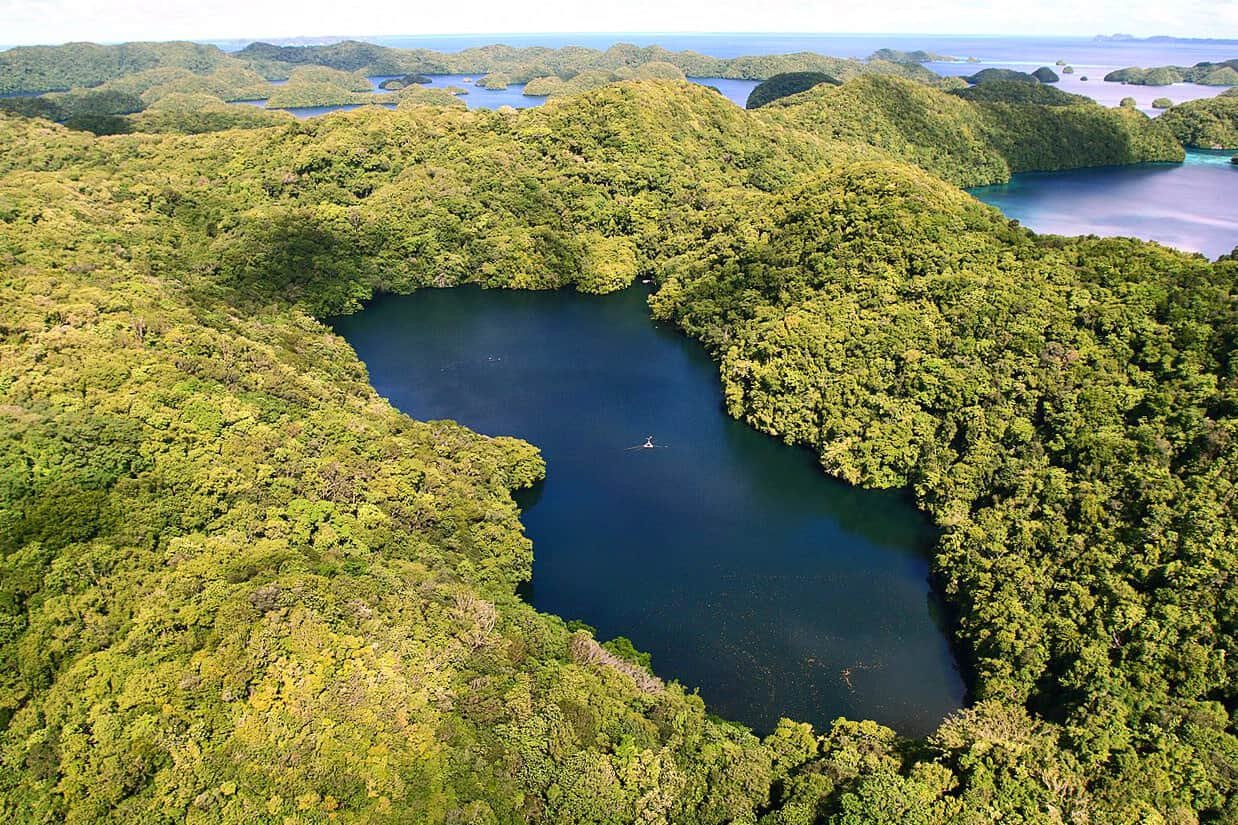
Nestled on the tiny, uninhabited island of Eil Malk in Palau’s Rock Islands, Jellyfish Lake—known locally as Ongeim’l Tketau, or “Fifth Lake”—is a meromictic marine lake. That’s a fancy way of saying it’s a saltwater pool cut off from the ocean, with layers of water that don’t mix, creating a unique ecosystem teeming with life. Formed about 12,000 years ago during the end of the last ice age, when rising seas flooded limestone depressions, this 400-meter-long, 30-meter-deep wonder is part of the UNESCO-listed Rock Islands Southern Lagoon.
What sets it apart? The lake hosts two species of jellyfish: the vibrant golden ones (Mastigias papua etpisoni, a subspecies found nowhere else on Earth) and translucent moon jellies (Aurelia sp.). These aren’t your stinging beach nightmares—they’ve evolved over millennia in isolation, losing most of their nematocysts (stinging cells) because they feed on symbiotic algae instead of hunting prey. On a good day, you might brush against five million of them, each about the size of a softball, migrating with the sun like a slow-motion ballet.
I remember my first glimpse: The trail down from the boat dock winds through lush mangroves, and suddenly, there’s this dark blue mirror edged by roots. Slipping in, the water hugs you like silk. It’s humbling—nature’s way of saying, “Slow down and just be.”
The Fascinating History and Formation of Jellyfish Lake
Palau’s marine lakes, including Jellyfish Lake, owe their existence to dramatic geological shifts. Around 20,000 years ago, during the Pleistocene era, global sea levels were 120 meters lower, leaving these depressions as dry valleys amid rising coral atolls. As ice melted, seawater rushed in, trapping marine life in isolated pockets. Over time, tectonic uplift and erosion sealed the connections, turning them into time capsules of evolution.
Local Palauan lore adds a cultural layer—elders speak of the lakes as sacred, part of the archipelago’s 3,000-year human history tied to fishing and navigation. European explorers noted them in the 1700s, but it wasn’t until the 20th century that scientists like marine biologist Michael Dawson classified the golden jellyfish as a distinct subspecies in 2000, naming it after former president Ngiratkel Etpison. Tourism boomed in the 1980s, drawing eco-curious travelers, but closures like 2016-2018 due to jellyfish die-offs highlighted the need for balance.
Today, it’s a living lab. Researchers from the Coral Reef Research Foundation (CRRF) track how these isolated systems mirror broader ocean changes, from El Niño droughts to sunscreen pollution. Walking that short, steep path to the lake, I couldn’t shake the feeling of time travel—12,000 years of adaptation, right under my fins.
The Unique Ecosystem: Jellyfish and Beyond
At its core, Jellyfish Lake thrives on symbiosis. The golden jellyfish host zooxanthellae algae in their tissues, which photosynthesize sunlight into energy—up to 95% of their diet. In return, the jellies shuttle around, maximizing light exposure. This duo explains their daily commute: At dawn, they pulse eastward; by afternoon, westward, avoiding shadows where sea anemones lurk as predators.
The lake’s stratification is key— the top 15 meters are oxygen-rich and sunlit, supporting the jelly bloom. Below? A toxic anoxic layer of hydrogen sulfide gas, pink bacterial mats, and zero light, like an underwater Dead Sea. Mangrove roots along the edges teem with crabs, snails, and fish, while occasional bird calls from above remind you it’s all connected.
Moon jellies add variety, drifting like ghostly parachutes, but they’re fewer and less studied. Fun fact: The whole setup is so delicate that a single fallen tree branch can let anemones invade sunny spots, disrupting the jelly party. It’s a tiny world, but it packs a punch—teaching us about resilience in places like coral reefs worldwide.
Why the Jellyfish Don’t Sting
Eons of isolation did the trick. Without predators or plankton to hunt, stinging lost its purpose; energy went to algae farming instead. Their nematocysts are vestigial—mild tingles at worst, like a baby’s breath. Still, allergies exist, so rash guards are smart.
Experts like Dr. Sylvia Earle, who snorkeled here with Oceanic Society, call it “evolutionary poetry.” No stings mean you can float freely, but remember: It’s their home, not a petting zoo.
Daily Migration Patterns
Every sunrise, the jellyfish school up and glide east, chasing photons for their algal buddies. By noon, they reverse, creating “jelly highways” you can join. It’s hypnotic—thousands brushing past, no chaos, just rhythm.
This solar sync is unique to Jellyfish Lake among Palau’s 70 marine lakes; others have looser patterns. Timing your visit for mid-morning maximizes the show, but crowds peak then too.
How to Get to Jellyfish Lake: Your Step-by-Step Journey
Reaching Palau starts with flying into Roman Tmetuchl International Airport (ROR) near Koror, the main hub. Direct flights from Seoul (4.5 hours, ~$600 round-trip), Tokyo (4 hours, ~$800), or Manila (2.5 hours, ~$500) are easiest; from the U.S., connect via Guam. Taxis to Koror run $20, and most hotels arrange pickups.
From Koror, it’s a 45-minute speedboat ride south to Eil Malk Island—book via operators like Sam’s Tours or Palau Dive Adventures. No ferries; all access is guided to protect the site. Once docked, hike 10-20 minutes up a steep, jungle trail (wear grippy shoes; it’s slippery after rain). The path’s signed, but rangers check permits at the top.
Pro tip: Go early to beat heat and tour groups. I once arrived at dawn, and the boat sliced through mist like a scene from a fantasy novel—pure bliss before the day unfolded.
Booking Tours and Permits
Independent visits? Nope—Palau mandates licensed guides. Tours bundle Jellyfish Lake with Rock Islands stops (Milky Way mud baths, German Channel) for $100-250/person, including gear and lunch. The $100 Rock Islands Permit (valid 10 days, ages 6+) covers entry; kids under 6 are free but must be carried.
Compare options:
| Tour Operator | Price (USD) | Inclusions | Duration |
|---|---|---|---|
| Sam’s Tours | $130 | Boat, gear, lunch, permit | 6-8 hours |
| Palau Dive Adventures | $150-200 | Snorkel spots, mud bath, expert guide | Full day |
| Paddling Palau | $120 | Kayak option, eco-focus | 5-7 hours |
Book ahead via Visit Palau; Viator has last-minute deals.
Best Time of Year to Visit
Palau’s tropical all year, but dry season (December-April) shines: Calm seas, 82-86°F water, low rain. Jelly populations peak post-monsoon (June-November), but avoid typhoon risks. Early mornings (8-10 AM) align with migrations; weekends get busier.
In 2025, with golden jellies rebounding from drought lows, spring’s ideal. I went in February—crystal skies, zero crowds mid-week. Just pack reef-safe sunscreen; Palau banned the toxic stuff in 2020.
Snorkeling in Jellyfish Lake: Tips for an Unforgettable Swim
Snorkeling here is effortless—no strong currents, depths of 2-10 meters, visibility 20-30 feet on clear days. Enter from the wooden dock; fins optional for the shallow start. Float with the flow—don’t chase jellies; let them come to you. Sessions last 45-60 minutes to minimize impact.
Gear up with a mask, snorkel, and life vest (provided). No scuba—toxic gases below 15 meters could kill you faster than a bad decision at karaoke. Bring a GoPro for those ethereal shots; the golden glow in sunlight is Instagram gold.
Humor alert: I once flipped upside down mid-swim, emerging sputtering like a drowned cat—only to find a jelly “high-fiving” my snorkel. Lesson? Relax; the lake rewards chill vibes.
Essential Snorkeling Gear and Preparation
Pack light: Rash guard (UV protection + allergy buffer), towel, water bottle. Tours supply masks/fins, but your own fit better. Apply sunscreen 30 minutes pre-entry—reef-safe only, per Palau Pledge.
- Must-haves: Mask defogger, waterproof phone case.
- Nice-to-haves: Underwater lights for cloudy days.
- Skip: Lotions, bug spray near water—they’re pollutants.
Hydrate post-swim; the hike back’s a sweat-fest.
Safety Rules and Etiquette
No touching jellies—oils harm algae. Stay surface-level; no diving. Rangers patrol, fining violators ($500+). If allergic, skip or suit up. Kids? Fine with floaties, but under adult watch.
It’s about respect: Sign the Palau Pledge at entry, promising “leave no trace.” One rogue sunscreen spill could bleach the bloom, like a bad breakup for the ecosystem.
Pros and Cons of Visiting Jellyfish Lake
Weighing the magic against realities helps plan smart. Here’s a quick rundown:
Pros:
- Otherworldly Experience: Swimming with stingless jellies feels like zero-gravity therapy—calming, connective.
- Eco-Education: Learn evolution in action; supports CRRF research via fees.
- Combo Value: Tours layer in beaches, reefs—full Palau immersion.
- Accessibility: Short hike, no advanced skills needed; family-friendly.
Cons:
- Costly: $100 permit + $100+ tour = $200+ for a hour’s swim. Palau ain’t cheap.
- Crowds: Peak season means 50+ swimmers; jellies scatter like shy party guests.
- Population Flux: 2025’s low golden numbers (under 6,000) disappoint some—moon jellies compensate, but expect variability.
- Weather-Dependent: Rain muddies visibility; heat exhausts hikers.
Overall? Worth every penny and paddle stroke, but temper expectations.
Conservation Challenges Facing Jellyfish Lake
Palau leads globally—Shark Sanctuary pioneer, plastic bag ban—but Jellyfish Lake’s fragility shines a spotlight. Climate change is the big bad: 2015-2016 El Niño warmed waters, bleaching algae and wiping 99% of goldens; recovery took years. Sunscreen compounds like oxybenzone bioaccumulate in jellies, per UNESCO studies, prompting the 2018 reef-safe mandate.
Tourism’s double-edged: 100,000+ visitors yearly fund rangers, but foot traffic erodes trails, fallen trees invite anemones. CRRF’s monthly counts guide closures—last in 2016-2018. Future? Rising seas could mix layers, flooding toxins upward.
It’s emotional: These jellies, isolated for millennia, mirror our planet’s tipping points. Visiting feels like stewardship—your $100 helps monitor, but it tugs at the heart knowing one hot summer could change everything.
How You Can Help Protect the Lake
Small acts amplify: Use mineral sunscreens (zinc-based), no touching, stick to paths. Support via donations to CRRF or eco-tours. Advocate—share stories, push for global emission cuts.
One visitor’s pledge: “I swam here; now I fight for it.” That’s the vibe—turn awe into action.
People Also Ask: Common Questions About Jellyfish Lake
Google’s “People Also Ask” pulls real curiosities—here’s the scoop, optimized for quick answers.
Do the Jellyfish in Jellyfish Lake Sting?
No, they’re harmless to humans. The golden and moon jellies have evolved minimal stings—mild tingles at most, like static. Allergies? Wear a rash guard. It’s why snorkeling feels safe and surreal.
Is Jellyfish Lake Still Open in 2025?
Yes, but with caveats. Golden populations are low (~5,600 as of early 2025) due to drought, but moon jellies thrive, and the lake’s magic endures. Check CRRF updates; no full closures planned.
How Much Does It Cost to Visit Jellyfish Lake?
Expect $100 for the 10-day Rock Islands Permit (ages 6+), plus $100-250 for a guided tour including boat and gear. Total: $200-350/person. Kids under 6 free; bundle with multi-day packages to save.
Can You Swim with Jellyfish in Palau?
Absolutely—at Jellyfish Lake, the world’s premier spot. Snorkel among millions (weather permitting); no scuba. Tours depart daily from Koror; book via licensed ops like Sam’s Tours.
Are There Crocodiles in Jellyfish Lake?
Nope—saltwater crocs stick to mangroves, not this isolated pool. The lake’s monitored, predator-free zone makes it family-safe. Just watch for slippery docks!
FAQ: Your Jellyfish Lake Questions Answered
Got lingering doubts? These cover top user queries from forums like TripAdvisor.
Q: Is it worth visiting if jellyfish numbers are low?
A: Yes, for the vibe alone—the serene lake, mangroves, and moon jellies create magic. Pair with Rock Islands dives; Palau’s reefs steal the show anyway. My low-jelly day? Still top memory.
Q: What’s the water like—salty, cold?
A: Salty as the sea (30-35 ppt), warm year-round (82-88°F). Visibility varies—crystal in dry season, murky post-rain. It’s buoyant, easy floating.
Q: Can kids go? How old?
A: Ages 6+ with permit; younger with life jackets. The shallow entry’s forgiving, but supervise closely. Families rave—my friend’s 4-year-old called it “jelly party time.”
Q: Any health risks besides stings?
A: Minimal—ear infections from dirty gear (rinse well), dehydration on the hike. No currents or sharks. Consult docs for open wounds; hydrogen sulfide stays deep.
Q: How do I get underwater photos without a camera?
A: Tours offer rentals ($20-50); or use your phone in a case. Go slow—jelly blurs reward patience. Pro hack: Mid-morning light = golden hour glow.
There you have it—your roadmap to Jellyfish Lake’s enchantment. Whether chasing jellies or just the thrill of the unknown, Palau delivers soul-stirring stuff. I left with salt-crusted skin and a fuller heart, vowing to return when the goldens swarm again. What’s stopping you? Grab that permit, book the boat, and let the Pacific work its wonders. Safe travels, and may the currents carry you home changed.