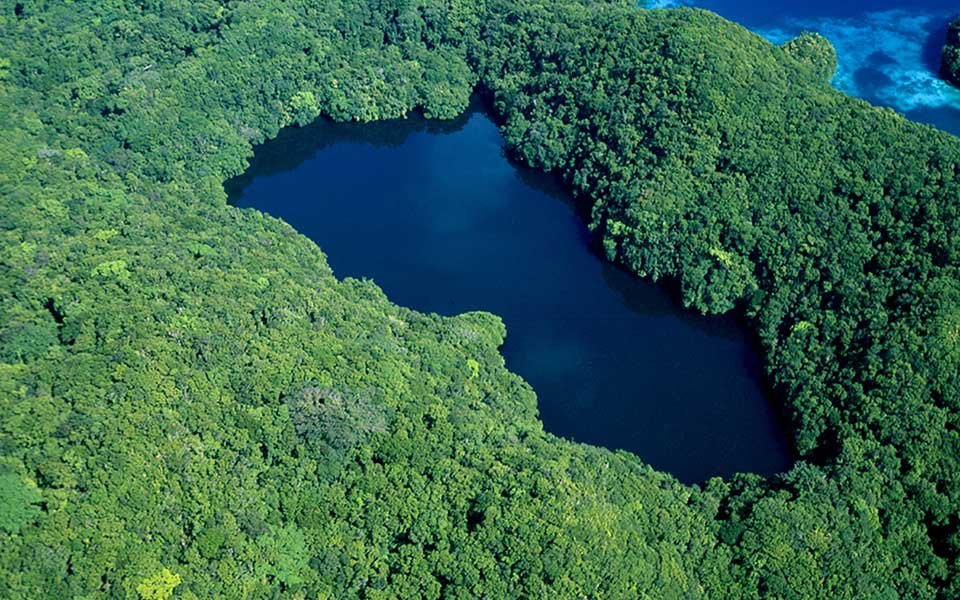
Imagine this: You’re floating in warm, emerald-green water, sunlight filtering through like golden threads, and all around you, thousands of jellyfish pulse gently, brushing your skin like soft whispers. No fear, no sting—just pure, surreal wonder. That’s Jellyfish Lake for you, a hidden gem in the Pacific that feels like stepping into a dream. I’ve chased adventures across the globe, from shark dives in the Great Barrier Reef to hiking volcanoes in Iceland, but nothing prepared me for the quiet magic of swimming with these living orbs. As someone who’s snorkeled in over 50 spots worldwide and chatted with local guides in Palau multiple times, I can tell you this place isn’t just a bucket-list tick; it’s a reminder of how fragile and fantastic our planet can be. Stick with me, and I’ll walk you through everything you need to know about this one-of-a-kind marine marvel.
What Is Jellyfish Lake?
Jellyfish Lake, or Ongeim’l Tketau in the local Palauan tongue—meaning “Fifth Lake”—sits tucked away on Eil Malk Island, part of Palau’s UNESCO-listed Rock Islands. This isn’t your typical ocean dip; it’s a landlocked saltwater lake, one of about 70 in the archipelago, where two types of jellyfish have evolved into harmless wonders. Formed around 12,000 years ago when rising seas filled ancient limestone depressions, the lake’s isolation has created a unique ecosystem that’s drawn scientists and travelers alike. Picture a 460-meter-long basin, 30 meters deep, fringed by mangroves, where the water layers don’t mix—oxygen-rich up top, toxic hydrogen sulfide below. It’s like nature’s own stratified cocktail, brewing life in ways we can barely fathom.
I remember my first glimpse in 2019, right after the lake reopened from a drought-induced closure. The air hummed with cicadas as I crested the hill, and there it was: a shimmering turquoise mirror reflecting the sky. No crowds yet, just me, a guide named Kelei, and the promise of something otherworldly. That moment hooked me—it’s not hype; it’s humbling.
The Fascinating History of Jellyfish Lake
Palau’s marine lakes trace back to the end of the last Ice Age, when melting glaciers raised sea levels and flooded karst depressions in the limestone islands. Jellyfish Lake formed then, around 12,000 years ago, trapping early jellyfish ancestors as waters receded. Over millennia, these trapped Mastigias species evolved in isolation, losing their spots and most stinging cells—adaptations born from necessity in a predator-free haven. Local lore from Palauan elders speaks of the lake as a sacred spot, the “fifth” in a series of seven, used for quiet reflection long before tourists arrived.
Fast-forward to the 20th century: European explorers noted it in the 1890s, but it stayed off the radar until the 1980s when dive magazines put it on the map. By the ’90s, it boomed as a must-see, peaking at 30 million golden jellyfish in 2005. But history isn’t all smooth sailing—droughts in 1998 and 2016 wiped out populations, closing the lake for years each time. It’s a tale of resilience, much like Palau itself, a nation that’s balanced tourism with conservation since banning certain sunscreens in 2018 to protect its reefs.
What strikes me most is how this history mirrors our own: bursts of discovery, setbacks from climate whims, and a slow climb back. During my 2023 revisit, chatting with a ranger who grew up nearby, he shared stories of his grandfather fishing the edges—reminding me that places like this aren’t frozen in time; they’re living archives.
The Science Behind the Stingless Jellyfish
At the heart of Jellyfish Lake’s allure are its jellyfish: the golden ones (Mastigias papua etpisoni, named after a former Palauan president) and moon jellies (Aurelia sp.), both evolved into near-harmless drifters. The goldens, about the size of softballs, host symbiotic algae called zooxanthellae that photosynthesize sunlight into energy—up to 95% of their diet, making them solar-powered nomads. They migrate daily, pulsing east in the morning and west by afternoon, chasing light to feed their algal buddies while snagging stray zooplankton with tiny oral arms.
Moon jellies, smaller and translucent, hover deeper, munching on copepods that rise at night. The lake’s meromictic nature—unmixing layers—keeps things stratified: the top 15 meters oxygenated for life, below a pink bacterial haze and deadly H2S gas that claims anything venturing too deep. No fish predators means biodiversity is low, but what thrives here is specialized—jellyfish populations fluctuate wildly, from millions to mere hundreds based on El Niño heat spikes bleaching their algae.
It’s evolutionary poetry in motion. On my last trip, a marine biologist guide explained how DNA tests show these jellies haven’t interbred with ocean kin in millions of years—like isolated cousins at a family reunion. It left me grinning, half in awe, half chuckling at how these squishy blobs outsmarted survival.
Golden Jellyfish: Solar-Powered Wanderers
These orange orbs, unique to the lake, have ditched most stingers for a life of symbiosis. Up to 5 million typically swarm the surface, their bell-shaped bodies pulsing in unison. Heat stress can crash numbers, as in 2016 when drought warmed waters, killing algae and forcing a two-year closure.
Scientists track them via tags, revealing migrations cover the full 400 meters daily—efficient sun-chasers that rotate for even exposure. It’s a delicate dance; one bad season, and poof, they’re scarce.
Moon Jellyfish: The Quiet Underdogs
Paler and bell-like, these make up the backup cast, thriving in shadier spots. Less studied but hardy, they filter-feed on microscopic crustaceans, with cryptic species ties linking them to four other Palau lakes.
They’re the reliable ones—populations held steady during golden die-offs. Spotting a cluster feels like uncovering a secret; they’re subtler, but no less enchanting.
How to Get to Jellyfish Lake
Reaching Jellyfish Lake starts with flying into Roman Tmetuchl International Airport (ROR) near Koror, Palau’s hub—flights from Seoul, Tokyo, or Manila run 4-5 hours. From there, it’s a 45-minute speedboat ride south to Eil Malk Island, arranged via licensed tours only; no solo jaunts allowed to protect the site.
Once docked, a 10-15 minute hike up a steep, jungle path—think roots and humidity—leads to the entry platform. Tours bundle this with Rock Islands stops, like the Milky Way cave or German Channel for mantas. I flew in via Guam once, nursing jet lag with a cold coconut on the boat ride—arriving felt like entering a secret world.
Pro tip: Book ahead; mornings beat the heat. And if seas are choppy, brace for a splashy commute.
Best Time to Visit Jellyfish Lake
Palau’s dry season, December to April, reigns supreme for Jellyfish Lake—clear skies, calm waters, and peak jellyfish numbers as cooler temps nurture algae. Avoid the wetter June-October stretch; rains can muddy visibility and swell crowds indoors.
In 2025, with golden populations rebounding post-2024 lows (thanks to La Niña cooling), early year visits promise denser swarms. I timed my 2022 trip for February—perfect light for photos, minimal rain, and that post-holiday quiet. Mornings around 9 AM catch the eastbound migration; it’s like joining a living river.
Weather’s fickle, though—check forecasts via the Palau Visitors Authority. Layer up for the hike; tropical “cool” still means 85°F.
Permits and Entry Requirements
Entry demands a $100 Rock Islands/Jellyfish Lake permit, valid 10 days for ages 6+, purchasable at Koror State offices or airports—covers the lake plus 40+ sites. Kids under 6 enter free, but all sign the Palau Pledge, vowing no-touch policies and reef-safe sunscreen.
No refunds for low jelly counts; it’s nature’s call. During my visits, rangers scan IDs at the dock—efficient, but pack cash for fees. It’s steep, but funds conservation; think of it as investing in the jellies’ future.
Snorkeling in Jellyfish Lake: What to Expect
Slip into the water from a wooden dock, and it’s instant immersion—warm (around 82°F), brackish, with visibility 20-30 feet on good days. Snorkel only; no fins in the lake to avoid stirring sediment. The jellies brush you softly, like velvet rain, as you drift with their flow—no chasing needed.
Expect 30-60 minutes max per visit to limit impact; crowds peak midday, so early birds win solitude. My heart raced that first brush—equal parts thrill and “Is this real?” peace. It’s meditative, almost spiritual.
Essential Snorkeling Tips
- Gear Up Right: Bring your own mask/snorkel for fit; tours rent basics. Rash guards beat sunscreen—apply any 30 minutes prior, reef-safe only.
- Follow the Flow: Swim with the migration; east mornings, west afternoons. Stay shallow—under 15 meters—to dodge the chemocline.
- Mind Your Manners: No touching jellies (harms their algae), no food, no flashes. Light humor: Pretend you’re a jelly—float, don’t flail.
- Health Check: Allergies? Consult a doc; rare mild tingles possible. Hydrate post-swim; the hike out’s a sweaty slog.
Conservation Efforts and Challenges
Palau leads globally—banning 10 sunscreen chemicals in 2018, enforcing no-touch rules, and monitoring via the Coral Reef Research Foundation (CRRF). Permits fund rangers who track invasives like lionfish, which snuck in via boats and prey on polyps.
Challenges loom: Climate change amps droughts, bleaching algae; tourism (pre-COVID, 100 daily visitors) risks sunscreen runoff. Yet rebounds happen—post-2016 closure, numbers hit millions by 2019. It’s a tightrope, but Palau walks it with grit.
I once joined a CRRF cleanup, netting debris—felt like giving back to old friends. Their work’s why the lake thrives; support by choosing eco-tours.
Pros and Cons of Visiting Jellyfish Lake
| Aspect | Pros | Cons |
|---|---|---|
| Experience | Unforgettable, serene swim; bucket-list magic. | Jelly numbers vary—could be sparse (e.g., 2024 lows). |
| Accessibility | Easy add-on to Rock Islands tours; family-friendly. | Steep hike; boat-dependent, weather-sensitive. |
| Cost | Permit bundles sites; value-packed. | $100+ fee stings for short stays. |
| Impact | Raises conservation awareness. | Crowds stress ecosystem if unmanaged. |
Comparison: Jellyfish Lake vs. Other Palau Marine Lakes
Palau boasts 70 marine lakes, but only five host jellyfish—Jellyfish Lake’s the sole tourist-accessible one. Others, like nearby Ursio Lake, mirror it with golden jellies but stay closed for research, lacking the easy path and platforms. Compared to open-ocean snorkels (e.g., Palau’s Blue Corner), the lake’s calmer, predator-free—ideal for beginners—but lacks diverse fish. Versus Indonesia’s Kakaban Lake (similar setup), Jellyfish edges out with better infrastructure and cultural ties.
For me, it’s the intimacy: No currents, just you and the pulse of life. If you’re weighing options, start here—it’s Palau’s gentle intro to wild wonders.
- Jellyfish Density: Highest here; others sparser.
- Visitor Rules: Strictest enforcement for sustainability.
- Unique Factor: Daily migration visible only in a few.
People Also Ask About Jellyfish Lake
Drawing from real Google searches, here’s what folks often wonder—quick answers to fuel your curiosity.
Do the Jellyfish in Jellyfish Lake Sting?
No, these evolved stingers are too weak for humans—mild tingles at worst for sensitive skin. Goldens especially are harmless, thanks to a zooplankton-and-algae diet over predation. Wear a rash guard if wary; it’s more tickle than terror.
How Many Jellyfish Are in Jellyfish Lake?
Typically 5 million goldens, plus moons—peaking at 30 million in good years. 2025’s rebounding from 2024 dips; expect thousands, not walls, but still mesmerizing.
Is Jellyfish Lake Worth Visiting in 2025?
Absolutely, even with fluctuating numbers—the serene vibe and ecosystem insight shine. Pair with dives; Palau’s more than one lake. Skip if crowds bug you; go early.
Can You Swim with Jellyfish in Palau?
Yes, snorkel-only in Jellyfish Lake; tours mandatory. It’s safe, surreal—follow the sun for the best drifts. No scuba; bubbles harm jellies.
Why Did Jellyfish Lake Close?
Droughts in 1998 and 2016 overheated waters, bleaching algae and crashing populations—closed 2016-2018 for recovery. Reopened when thousands returned; climate vigilance key now.
FAQ: Common Questions About Jellyfish Lake
Is It Safe for Kids to Snorkel in Jellyfish Lake?
Yep, for ages 6+ with supervision—life jackets recommended for non-swimmers. The calm water’s forgiving; my guide’s family joins yearly. Just no deep dives.
What’s the Cost of a Tour to Jellyfish Lake?
$100-250 USD, including permit, boat, gear, and extras like lunch. Sam’s Tours or Palau Dive Adventures offer solid packages—book via their sites for deals.
How Long Does the Hike to the Lake Take?
10-15 minutes up a moderate trail—wear grippy shoes. It’s short but steep; take water. Views from the top? Worth every step.
Are There Other Jellyfish Spots Like This?
Palau has four more lakes with jellies, but closed. Globally, Indonesia’s Kakaban’s similar—check this comparison for deets.
What If There Are No Jellyfish When I Visit?
Rare but possible—focus on the lake’s tranquility and bundled Rock Islands snorkels. Tours often pivot to manta rays; it’s still a win.
There you have it—your roadmap to Jellyfish Lake’s ethereal embrace. Whether you’re a science buff geeking over symbioses or a dreamer chasing that floaty high, this spot delivers. I’ve left pieces of my soul there, from laughter with guides to quiet floats pondering life’s currents. Pack light, pledge strong, and dive in. Palau’s waiting—what’s your story going to be?