Hey there, fellow nature lover. Picture this: You’re hiking through a misty cloud forest in Costa Rica, the air thick with the scent of orchids and damp earth. Suddenly, a flash of iridescent green catches your eye—a bird with tail feathers trailing like a comet’s tail, shimmering in the dappled light. Your heart skips. Is that real? I’ve been chasing moments like that for over 20 years as a wildlife photographer and amateur ornithologist, and let me tell you, the world’s got some avian showstoppers that make you question if Mother Nature hired a special effects artist. These aren’t your everyday sparrows; they’re the birds that turn a simple walk into a jaw-dropping adventure. In this piece, we’ll dive into 10 of the most stunning ones—feathered wonders so vibrant and otherworldly, they look photoshopped into existence. Buckle up; we’re about to take flight.
Why These Birds Seem Straight Out of a Fantasy Novel
I’ve lost count of the times I’ve stared at a bird through my binoculars and whispered, “No way,” half-expecting it to vanish like a mirage. What makes them so surreal? It’s the explosive colors—iridescent blues that shift like oil on water, fiery reds that glow without flames—and the wild shapes, from elaborate crests to tails longer than the bird itself. Evolution’s handiwork, sure, but it feels like wizardry. These species often hail from remote rainforests or isolated islands, where natural selection favors the bold to snag mates or hide in plain sight. Spotting one isn’t just a tick on your life list; it’s a reminder that our planet’s still hiding pockets of pure magic. And yeah, it tugs at the soul—knowing some are teetering on the edge of extinction makes every glimpse bittersweet.
The Resplendent Quetzal: Emerald Royalty of the Clouds
Ah, the quetzal—my first “holy cow” bird, spotted on a rainy dawn patrol in Guatemala back in 2005. I slipped on the trail, mud up to my knees, but there it was: a male perched like a living jewel, his green body gleaming, red breast popping against the fog. Named after an Aztec god, this trogon looks like it stepped off a Mayan temple carving, with tail streamers up to three feet long that flutter like silk banners.
Native to Central America’s cloud forests, from Mexico to Panama, the resplendent quetzal (Pharomachrus mocinno) thrives at elevations around 4,000 to 10,000 feet, where it feasts on wild avocados, fruits, insects, and the occasional frog or lizard. Males grow to about 15 inches, females a tad smaller and less flashy, but both sport that signature iridescence from light-bending feather structures—no pigments needed, just physics pulling off the impossible.
Habitat and Where to Spot One
Cloud-shrouded montane forests are their jam—think Monteverde in Costa Rica or the Sierra de las Minas in Guatemala. Guided tours here often include early-morning stakeouts; I’ve joined a few where locals play recordings of their soft, kyow calls to lure them closer. Pro tip: September to March is breeding season, when males get extra showy. Conservation-wise, habitat loss from logging and coffee farms has slashed populations by 50% in some areas, so ecotourism outfits like Cloud Forest Tours channel funds back to protection.
Fun Quirks That Make It Even Cooler
This bird’s monogamous—pairs stick together for life, raising one to three chicks in tree cavities they excavate with their beaks. The male does most brooding, looking hilariously lopsided with those tails crammed into a hole. And get this: Quetzals can’t walk well; they hop awkwardly on branches. It’s like nature said, “Beauty over brawn.” If you’re planning a trip, pack rain gear—their world is perpetually drizzly, but that’s what keeps the greens so lush.
The Superb Bird-of-Paradise: Nature’s Breakdancer
I remember my jaw dropping in Papua New Guinea’s lowland rainforests, where a superb bird-of-paradise (Lophorina superba) launched into a courtship disco that rivaled any Vegas show. Fluffing his cape-like feathers into a perfect oval frame, he spun and vibrated, turning his black plumage into a hypnotic black hole edged in electric blue. At first glance, it looks like a floating smiley face—too cartoonish to compute.
These feathered performers hail from eastern Australia and New Guinea, zipping through dense canopies at speeds up to 30 mph. Males measure about 10 inches, with females plainer but no less agile; their diet? Fruits, insects, and nectar, slurped mid-hover like tiny helicopters.
Courtship Moves That’ll Make You Blush
Breeding season (October to May) turns males into showmen, clearing “lek” arenas on the forest floor and belting out wolf-whistle calls. One study I read counted over 20 dance variations—side-shuffles, wing-flares, even head-bobs that make their blue “smiley” mouth glow. Females pick the flashiest, leading to some hilariously rejected suitors. It’s equal parts awe and chuckle-worthy; I once watched a male trip over a twig mid-spin.
Best Spots for a Live Show
Head to Varirata National Park in PNG or Iron Range National Park in Queensland, Australia—both hotspots with boardwalks easing access. Guided birding tours via PNG Birdwatching run $200-500 per day, including spotting scopes for distant leks. Populations are stable but fragmented; avoid off-trail wandering to prevent disturbing nests.
The Golden Pheasant: Fiery Phoenix of the Mountains
Spotting a golden pheasant (Chrysolophus pictus) in China’s bamboo thickets felt like uncovering a living flame. I was on a solo trek near Chengdu when a male burst from undergrowth—golden cape blazing, red belly smoldering, tail a cascade of coppery strands. It’s no wonder they’re called “firebirds”; they look engineered for drama, not survival.
Endemic to central China’s rugged hills, these ground-dwellers clock in at 36-41 inches (mostly tail), munching bamboo shoots, seeds, and bugs. Escaped captives have sparked feral groups in the UK and US, but wild ones stay elusive.
Why the Colors Scream “Look at Me!”
Males use that golden ruff in explosive displays, fanning it like a solar flare to woo females—who sport subtler tans. The hue? Melanin and carotenoids from diet, amplified by structural iridescence. One rainy hike, I saw a male shake off water, turning his feathers into a dripping rainbow. Hilarious and hypnotic.
Tracking Them Down Ethically
Dujiangyan Panda Base edges their habitat; join ethical tours through China Bird Tours for $150/day, focusing on non-intrusive viewing. Numbers hover at 10,000-20,000 wild birds, threatened by habitat conversion—your visit supports reforestation.
The Victoria Crowned Pigeon: Regal Ground Dweller
In New Guinea’s steamy lowlands, I knelt in the mud for an hour to glimpse a Victoria crowned pigeon (Goura victoria)—the world’s largest pigeon, with a lacy blue crest like a feathered tiara atop slate-gray elegance. At 29 inches and 4 pounds, it struts like royalty, cooing softly as it pecks fallen fruits.
These forest floor foragers favor seeds, figs, and invertebrates, flying short bursts to escape predators. Pairs mate for life, a rare avian romance that tugs at my sentimental side.
Crest Secrets and Family Vibes
That crown isn’t just pretty; it signals mood—fluffed in excitement, flat in calm. Chicks hatch fuzzy-white, demanding constant brooding. I once watched a pair share a fig, bills touching gently—pure poetry amid the humidity.
Prime Viewing Localities
Kutini-Payamu National Park in Australia or Wasur National Park in Indonesia offer hides for close-ups. Budget $300 for guided day trips via New Guinea Safaris. Vulnerable status means stick to paths; poaching for the pet trade has halved wild numbers.
The Mandarin Duck: Oriental Watercolor Masterpiece
Paddling a quiet pond in Japan’s Kyoto gardens, I froze as a mandarin duck (Aix galericulata) surfaced—male’s orange sails unfurling, purple breast glowing, two whisker-like feathers framing his clownish sailfin face. It’s like a woodblock print come alive, too ornate for reality.
From East Asia’s woodlands and wetlands, these 20-inch divers dabble in seeds, acorns, and snails. Escaped birds thrive in Europe and North America now.
Mating Magic on the Water
Males whistle and flap in synchronized swims, sails bobbing like party hats. Females lay 9-12 eggs in tree hollows; I’ve seen fledglings parachute to water—tiny parachutists in downy suits.
Where to Paddle for a Peek
London Wetland Centre in the UK or Sakurayama Pond in Japan. Free entry at many sites; populations boom in parks, though wild Asian numbers dip from hunting.
The Scarlet Macaw: Tropical Firecracker
Deep in the Amazon, a scarlet macaw’s (Ara macao) screech pierced the canopy—a crimson rocket with yellow shoulders and blue wingtips, cracking nuts like thunderclaps. At 32 inches, it’s a squawking rainbow, bonds lifelong with mates.
Central/South American rainforests fuel their nut-and-fruit frenzy; flocks of 20-30 paint the sky.
Squad Goals and Smarts
These parrots solve puzzles for treats—I’ve watched one unscrew a feeder cap. Pairs preen each other endlessly, a feathery love language.
Amazon Hotspots
Manu National Park in Peru—$400 multi-day tours with lodges. Endangered by pet trade; choose ethical operators.
The Lilac-Breasted Roller: African Acrobat
On a dusty Kenyan savanna, a lilac-breasted roller (Coracias caudatus) tumbled mid-air, violet chest flashing against turquoise wings. This 14-inch gymnast looks painted by a kid with too many crayons.
Woodlands from Ethiopia to South Africa host their insect-hawking aerials.
Tumbling for Love
Courtship rolls showcase six color phases—blue to green to lilac. One botched flip had me snickering; nature’s got humor.
Safari Sights
Maasai Mara—$250 game drives spot them perched on acacias. Stable populations, but pesticides loom.
The Painted Bunting: Patchwork Patriot
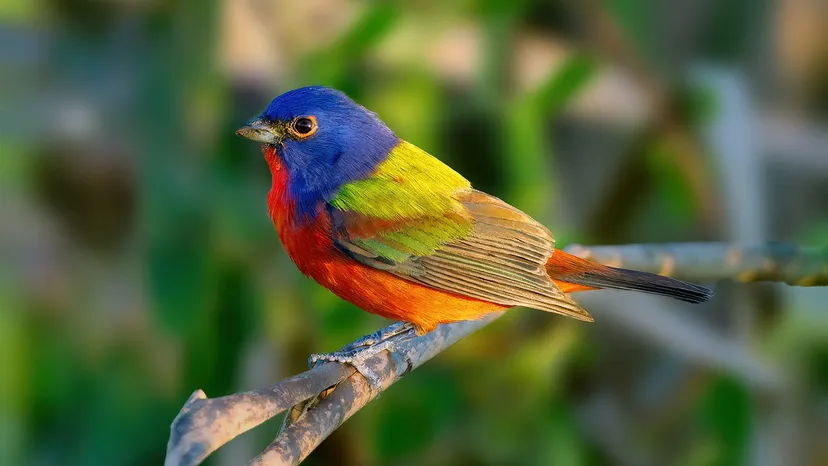
In Texas scrub, a painted bunting (Passerina ciris) hopped out—blue head, red rump, green back like a fireworks mishap. This 5-inch finch hides in thickets, bursting color only in breeding season.
Southeastern US coastal plains; seeds and bugs sustain secretive lives.
Camo Kings
Males molt drab in winter—ultimate undercover agents. A spring reveal feels like unwrapping a gift.
Backyard and Trail Tips
Big Bend National Park—free trails; attract with millet feeders. Declining from habitat loss.
The Keel-Billed Toucan: Cartoon Come to Life
Costa Rica’s canopy hid a keel-billed toucan (Ramphastos sulfuratus)—huge rainbow bill like a banana boat, yellow throat framing black body. At 20 inches, it’s a fruit-chomping clown.
Central American forests; bill aids reaching plums, doubles as resonator.
Bill of Many Talents
Hollow for lightness, it changes color with mood. I’ve heard their froggy croaks echoing like a comedy club.
Canopy Cruises
Monteverde Cloud Forest—$50 zip-lines for views. Vulnerable; support via Rainforest Alliance.
The Hyacinth Macaw: Cobalt Giant
Pantanal wetlands revealed a hyacinth macaw (Anodorhynchus hyacinthinus)—3-foot blue behemoth cracking palm nuts with a vise-like bill. World’s largest flying parrot, voice a gravelly trumpet.
Brazil’s floodplains; pairs roam vast territories.
Bonded for Life
They mate dance—wing-waving waltzes. One duo I saw shared a nut, bills interlocking tenderly.
Wetland Wanderings
Northern Pantanal—$300 boat tours. Endangered; illegal logging hits hard.
The Rainbow Lorikeet: Pocket-Sized Prism
Australia’s eucalypts buzzed with rainbow lorikeets (Trichoglossus moluccanus)—neon streaks of red, blue, green, yellow zipping like living lasers. These 12-inch nectar sippers flock in chattering gangs.
Coastal woodlands; brush-tongues lap pollen like hummingbirds.
Party Animals
Communal roosts hit 1,000 birds—screechy sleepovers. A dawn chorus once woke me giggling.
Urban and Wild Escapes
Sydney Royal Botanic Garden—free; invasive in some spots, but native Down Under.
Why Protect These Feathered Unicorns?
Chasing these birds has taught me humility—they’re not props in our selfies; they’re ecosystem MVPs, pollinating, seeding, and controlling pests. But deforestation, trade, and climate shifts threaten half on this list. I’ve donated trek fees to groups like BirdLife International, and you can too—every bit counts.
Pros and Cons of Birding for These Beauties
- Pros: Life-changing sights, fitness boost, global connections.
- Cons: Costly travel, weather woes, ethical dilemmas in crowds.
| Bird | Key Color Palette | Ideal Season | Conservation Status |
|---|---|---|---|
| Resplendent Quetzal | Green, Red | Dry (Dec-Apr) | Near Threatened |
| Superb Bird-of-Paradise | Black, Blue | Wet (Oct-May) | Least Concern |
| Golden Pheasant | Gold, Red | Spring | Vulnerable |
| Victoria Crowned Pigeon | Blue-Gray, Lacy Crest | Year-Round | Vulnerable |
| Mandarin Duck | Orange, Purple | Breeding (Mar-Jun) | Least Concern |
| Scarlet Macaw | Red, Blue, Yellow | Dry | Least Concern |
| Lilac-Breasted Roller | Violet, Turquoise | Summer | Least Concern |
| Painted Bunting | Blue, Red, Green | Spring Migration | Near Threatened |
| Keel-Billed Toucan | Rainbow Bill | Year-Round | Vulnerable |
| Hyacinth Macaw | Cobalt Blue | Dry | Vulnerable |
| Rainbow Lorikeet | Neon Rainbow | Year-Round | Least Concern |
Gear Up: Best Tools for Spotting Surreal Feathered Friends
Ready to hunt these visions? Start with Nikon Monarch 10×42 Binoculars—crisp, lightweight at $250, perfect for canopy scans. For distant macaws, a Swarovski ATS 80mm Spotting Scope ($2,000 with tripod) magnifies without distortion. Apps? Merlin Bird ID uses AI for instant IDs—I’ve nailed buntings mid-flight. And don’t forget a Vortex Solo Monocular ($100) for pocketable peeks. Transactional tip: Bundle via REI for deals.
Comparison: Binocs vs. Scopes for Exotic Hunts
| Tool | Best For | Price Range | Weight |
|---|---|---|---|
| Binoculars (e.g., Nikon) | Mobile forest treks | $200-500 | 1-1.5 lbs |
| Spotting Scope (e.g., Swarovski) | Static wetland watches | $1,500+ | 3-5 lbs w/tripod |
Pros of binocs: Quick swings, both eyes. Cons: Limited zoom. Scopes win for detail but tire arms.
People Also Ask: Quick Hits on Unreal Birds
Based on real Google queries, here’s the scoop:
What is the most colorful bird in the world?
The rainbow lorikeet edges it with its full-spectrum flash—red head, green wings, blue belly, yellow collar. A walking Pride parade.
Where can I see exotic birds that look fake?
Costa Rica’s Monteverde for quetzals, Brazil’s Pantanal for macaws—book via Intrepid Travel.
Are there birds that look like cartoons?
Totally—the puffin with its clown beak or the hoopoe’s punk crest. Nature’s animators at work.
What makes birds look so vibrant?
Iridescence from feather nanostructures scatters light like a disco ball—no dye needed, just physics magic.
FAQ: Your Burning Questions Answered
1. Can I keep one of these cool-looking birds as a pet?
Short answer: Don’t. Most are protected; the pet trade devastates wild pops. Opt for ethical aviaries or support sanctuaries like World Parrot Trust. I’ve volunteered at one—rewarding, but nothing beats wild freedom.
2. How do these birds get such unreal colors?
Diet and structure: Carotenoids from fruits tint reds/oranges; microscopic barbules bend light for blues/greens. It’s evolution’s palette—fascinating, right? One field study showed lorikeets’ neon fades without enough pollen.
3. What’s the rarest bird on this list?
Hyacinth macaw—fewer than 7,000 left, per IUCN. Nest poaching’s the killer; visit responsibly to fund guards.
4. Best beginner tool for spotting them?
Merlin app—free, offline sound ID, and location-based lists. Paired with basic binocs, it’s a game-changer for newbies like I was in ’05.
5. Do they migrate, and when’s prime viewing?
Varies: Quetzals altitudinal shift; macaws stay put. Spring/fall for buntings in the US—check eBird for real-time maps.
Whew, what a flock. These birds aren’t just eye candy; they’re sparks that reignite our wonder. Next time you’re out, slow down—maybe you’ll catch your own unreal moment. What’s your dream sighting? Drop a comment; I’d love to swap stories. Safe trails, and keep looking up.