Picture this: You’re snorkeling in crystal-clear waters off the Carolina coast, the sun filtering through like golden threads. Suddenly, your guide points to a glint in the sand—a jagged triangle bigger than your palm. You brush it off, heart pounding, and realize it’s a fossil tooth from something ancient and massive. That’s how I found my first megalodon tooth back in 2018, during a family trip that turned into an obsession. Holding that relic, I couldn’t help but wonder: What kind of monster shark locked jaws in battles that left scars on its own kind? Turns out, recent fossil finds are rewriting the story of these ocean titans, hinting at epic showdowns that make modern shark fights look like playground scuffles.
The Mighty Megalodon: Apex Predator of Ancient Seas
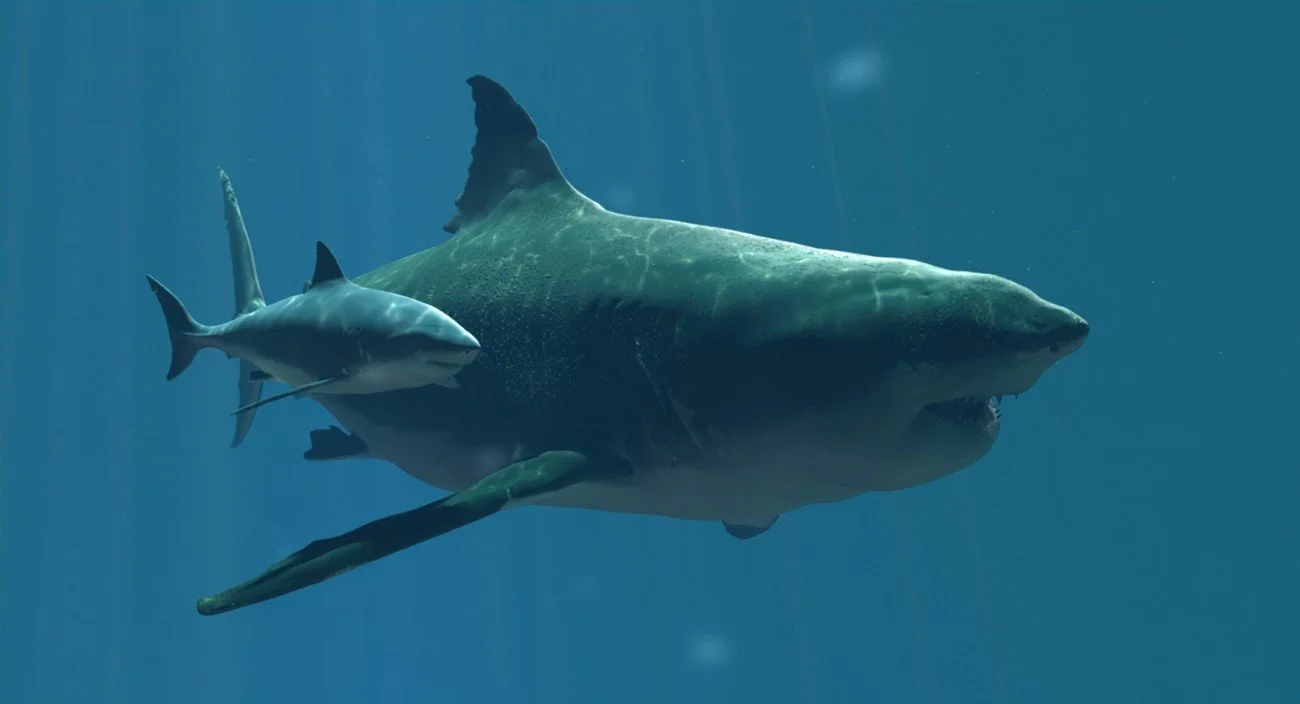
Megalodon, or Otodus megalodon, ruled the oceans from about 23 million to 3.6 million years ago, a time when whales were evolving into the giants we know today. This behemoth stretched up to 60 feet long, with a body built for speed and power, slicing through water like a living torpedo. Fossils paint a picture of a shark that wasn’t just big—it was a force of nature, reshaping marine ecosystems with every chomp.
Its name means “big tooth,” and for good reason. Those serrated blades could reach seven inches, arranged in multiple rows for constant replacement. Imagine a mouth that gaped three meters wide, capable of crushing bone like it was driftwood. But beyond the hunting prowess, emerging evidence suggests these sharks turned those jaws on each other, sparring in ways that echo the rough-and-tumble of today’s great whites.
I’ve spent hours in museums, staring at reconstructed jaws that dwarf me, feeling that mix of awe and chill. It’s not just science; it’s a window into a world where survival meant facing rivals head-on, teeth to teeth.
Unraveling the Evidence: Bite Marks That Tell a Tale
Fossil teeth don’t lie—they bear the grooves of ancient violence. In early 2025, researchers announced discoveries of megalodon teeth etched with parallel scratches matching the serrations of their own kind. These aren’t random nicks from prey; they’re deep gouges on the roots and edges, suggesting forceful clashes where one shark’s mouth met another’s in a frenzy.
Take a specimen from North Carolina’s Nutrien Aurora Phosphate Mine: A pristine megalodon tooth crossed by diagonal scars, as if snapped in a rival’s grip during a heated encounter. Similar finds from South Carolina riverbeds and Maryland cliffs show the same pattern, classified as Knethichnus parallelum—trace fossils from serrated teeth scraping across hard surfaces. Paleontologists like those at the New Scientist report argue these marks point to intra-species aggression, not just feeding mishaps.
What strikes me is the rarity—only a handful of these “self-bitten” teeth exist, making each one a jackpot for fossil hunters. I remember chatting with a diver in Florida who pulled one up; his eyes lit up as he described the “battle scar” vibe, like finding a warrior’s notched sword.
How Do We Know It’s Sparring, Not Just a Feeding Flub?
Experts rule out simple jaw occlusion because megalodon’s upper jaw protrudes far beyond the lower, making tooth-on-tooth contact during bites unlikely. Instead, the marks align with behaviors seen in modern lamniform sharks, where great whites lock jaws in displays of dominance.
These scratches often appear on tooth roots, exposed only if a shark wrenched its mouth wide against resistance—like clamping onto a fellow megalodon’s face. It’s not proof of full-on fights to the death, but it whispers of ritualized sparring, testing strength without fatal blows. Humorously, it’s like prehistoric sharks trash-talking with their teeth: “You call that a bite? Hold my fin.”
Key Fossil Sites Yielding These Clues
- Nutrien Aurora Mine, North Carolina: Phosphate-rich digs uncover teeth with fresh-looking gouges, dated to 15 million years old.
- Calvert Cliffs, Maryland: Eroded beaches reveal marked specimens amid whale bones, linking sparring to hunting grounds.
- Cooper River, South Carolina: Divers snag riverbed treasures showing diagonal drags, hinting at shallow-water brawls.
These spots aren’t just for pros—amateurs with snorkel gear can join guided hunts, turning research into adventure.
Jaw Mechanics: Built for Battle as Much as the Hunt
Megalodon’s jaws weren’t mere eating tools; they were weapons engineered for versatility. Spanning up to 11 feet wide, lined with 276 serrated teeth, they delivered a bite force of 108,000 to 182,000 Newtons—enough to pulverize whale ribs. Thick cartilage frames supported massive muscles, allowing gapes that engulfed prey whole.
But sparring demanded more: flexibility to lock and twist without shattering. Fossil reconstructions, like those at the Smithsonian, show a flatter, squatter jaw than a great white’s, ideal for grappling. This setup let sharks ram and clamp, using leverage to wear down opponents.
I once watched a 3D simulation at a paleontology conference—those jaws snapping shut with a virtual crunch that made the room gasp. It’s the kind of raw power that explains why a casual tussle could leave lasting marks.
Bite Force Breakdown: Megalodon vs. Modern Sharks
| Shark Species | Estimated Bite Force (Newtons) | Jaw Gape (meters) | Primary Use in Aggression |
|---|---|---|---|
| Megalodon | 108,500–182,200 | 2.7–3.4 | Sparring & prey immobilization |
| Great White | 18,000–18,200 | 0.6–0.7 | Jaw-locking displays |
| Bull Shark | 5,500–6,000 | 0.4–0.5 | Territorial ramming |
This table highlights why megalodon’s hardware outclassed rivals, turning potential scraps into etched histories.
Why Would Giant Sharks Spar? Insights from Behavior
In the cutthroat world of ancient oceans, sparring likely served survival smarts. Modern analogs like great whites jaw-spar over territory or mates, establishing pecking orders without wasting energy on lethal fights. For megalodon, with food scarce during cooling climates, these clashes could secure prime hunting lanes or breeding rights.
Cannibalism adds a dark twist—juveniles ate siblings in utero, per CT scans of 15-million-year-old vertebrae. Adults might’ve turned on weaker peers during frenzies, bite marks fueling theories of opportunistic aggression.
Emotionally, it humanizes these beasts: Imagine the adrenaline of two titans circling a whale carcass, jaws flashing in a test of wills. It’s primal, almost relatable—like siblings wrestling over the last slice of pizza, but with 50-ton stakes. And yeah, it makes you grateful great whites top out at 20 feet.
Possible Triggers for Megalodon Showdowns
- Territorial Disputes: Defending coastal nurseries where pups grew to two meters at birth.
- Mating Rituals: Males sparring to impress females, much like elephant seals today.
- Resource Competition: Clashing over migrating whale pods in warming Miocene seas.
These aren’t wild guesses; they’re backed by whale fossils riddled with megalodon gashes, showing overlap in hot spots.
Megalodon vs. Modern Sharks: A Hypothetical Throwdown
If megalodon met a great white today, it’d be no contest—size alone tips the scales. But focusing on jaw sparring, modern sharks offer a blueprint. Great whites lock mouths in open-ocean standoffs, leaving superficial scars; scale that to megalodon’s mass, and you’d get the deep grooves we see in fossils.
Comparatively, bull sharks ram more than bite, while tigers slash with hooks. Megalodon’s robust dentition favored crushing grips, perfect for prolonged grapples.
Pros of Megalodon Sparring Style:
- Immense leverage for quick dominance.
- Serrated edges deterred easy escapes.
- Energy-efficient for conserving stamina on big-game hunts.
Cons:
- Risk of tooth loss in close quarters.
- Exposed cartilage vulnerable to counters.
- High injury rate in nutrient-poor waters.
This matchup underscores evolution’s tweaks: Today’s sharks lean sleeker for agility, while megalodon bulked up for brute-force brawls.
The Thrill of the Hunt: Where to Find Megalodon Fossils Today
Craving your own piece of prehistoric drama? Head to fossil-rich coasts for hands-on discovery. South Carolina’s beaches, like those near Charleston, yield teeth weekly—perfect for beginners with a metal detector and patience.
For guided dives, check Aquanutz Scuba in Venice, Florida, where pros like Blair Morrow snag marked specimens. Or visit the Calvert Marine Museum for exhibits on bitten dolphin tails, linking sparring sites to prey zones.
Navigational tip: Use apps like Rockd for geo-tagging finds, and always check local regs—fossils are public treasure, but respect the sites.
Best Tools for Fossil Hunting Enthusiasts
- Sift Screens & Buckets: Essential for riverbed sifting; get stainless steel for durability (~$20 on Amazon).
- UV Lights: Reveal hidden fluorescence in teeth; LED models start at $15.
- Field Guides: “Megalodon: The Hunt for the Largest Shark” by John D. Megahan—great for ID’ing bite marks.
These gear up transactional searches, turning curiosity into collections.
Cultural Echoes: Megalodon in Media and Myth
From The Meg‘s blockbuster chomps to Discovery’s infamous “Megalodon: The Monster Shark Lives,” pop culture amps the drama. But real science trumps fiction—those 2013 “docu-dramas” sparked outrage for faking evidence, yet boosted interest in legit fossils.
Personally, after my airport jaw selfie in Vegas (yep, that $1.2 million display), I dove deeper, volunteering at digs. It’s that spark—mixing myth with marks on bone—that keeps the story alive, reminding us oceans hide more secrets than we know.
People Also Ask: Common Curiosities on Megalodon Sparring
Drawing from real Google queries, here’s what folks wonder about these jaw-jousting giants.
Who would win in a fight between a Livyatan and a Megalodon?
Livyatan, the toothed whale, edges it out with echolocation for ambushes and a battering-ram head, plus pack hunting smarts. Megalodon’s solo bite is fierce, but the whale’s versatility tips the scales—think brains over brawn in a prehistoric slugfest.
Is there any modern-day animal, besides humans, that can beat or kill a Megalodon?
Orcas and sperm whales top the list; their ancestors likely contributed to megalodon’s downfall. Orcas’ coordinated attacks could overwhelm, while sperm whales’ massive heads deliver knockout rams. No single beast matches one-on-one, but teamwork triumphs.
If the megalodon was still alive, would they be eating people?
Unlikely as a staple—humans are bite-sized compared to whale dinners. But opportunistic? Sure, like great whites mistaking surfers for seals. Cooling oceans shrank their range; we’d be calamari only if desperate.
What do we think of documentaries like ‘Megalodon: The Monster Shark Lives’?
Entertaining fluff, but misleading—it’s scripted fiction posing as fact, eroding trust in real science. Skip for BBC’s Shark series; they blend behavior footage with fossil facts without the hoax hype.
Is it possible for a human to defeat an adult megalodon with bare hands?
Zero chance—extinct for millions of years, but hypothetically? Its 60-foot frame and 40,000-pound bite laugh at bare knuckles. Even aware, you’d be gulped in seconds. Stick to fossils for safe thrills.
FAQ: Your Burning Questions on Megalodon Jaw Sparring Answered
What exactly is megalodon jaw sparring?
It’s the hypothesized aggressive encounters where these sharks locked jaws, leaving serrated scratches on each other’s teeth. Fossil evidence from 2025 studies shows marks too precise for accidents, pointing to dominance displays or territorial tussles.
Where can I get authentic megalodon teeth with bite marks?
Try reputable dealers like Buried Treasure Fossils or eBay certified sellers—prices range $50–$500 for marked ones. For the real deal, join dives via FossilEra tours.
Best documentaries for real megalodon fighting behavior?
Nova: Monsters of the Deep or Prehistoric Planet episodes on sharks—grounded in science, with CGI reconstructions of hunts and potential spars. Avoid Discovery’s fakes; go for Nat Geo’s Great White Serial Killer for modern parallels.
How does megalodon sparring compare to great white fights?
Both involve jaw-locking, but megalodon’s scale amplified damage—deeper gouges versus superficial nicks. Great whites spar lightly for hierarchy; megalodon likely went harder, per fossil depth.
Could megalodon still exist, sparring in deep seas?
No solid evidence—bite-marked whale bones would surface if so. Extinction tied to cooling oceans and whale migrations; deep-sea myths persist, but science says they’re gone.
As we wrap this dive into megalodon’s toothy tango, remember: These scars aren’t just scratches—they’re stories of survival etched in stone. Whether you’re beachcombing for your next find or bingeing dino docs, the past swims closer than you think. What’s your take—were these sharks brawlers or just bad at sharing dinner? Drop a comment; let’s keep the conversation chomping.