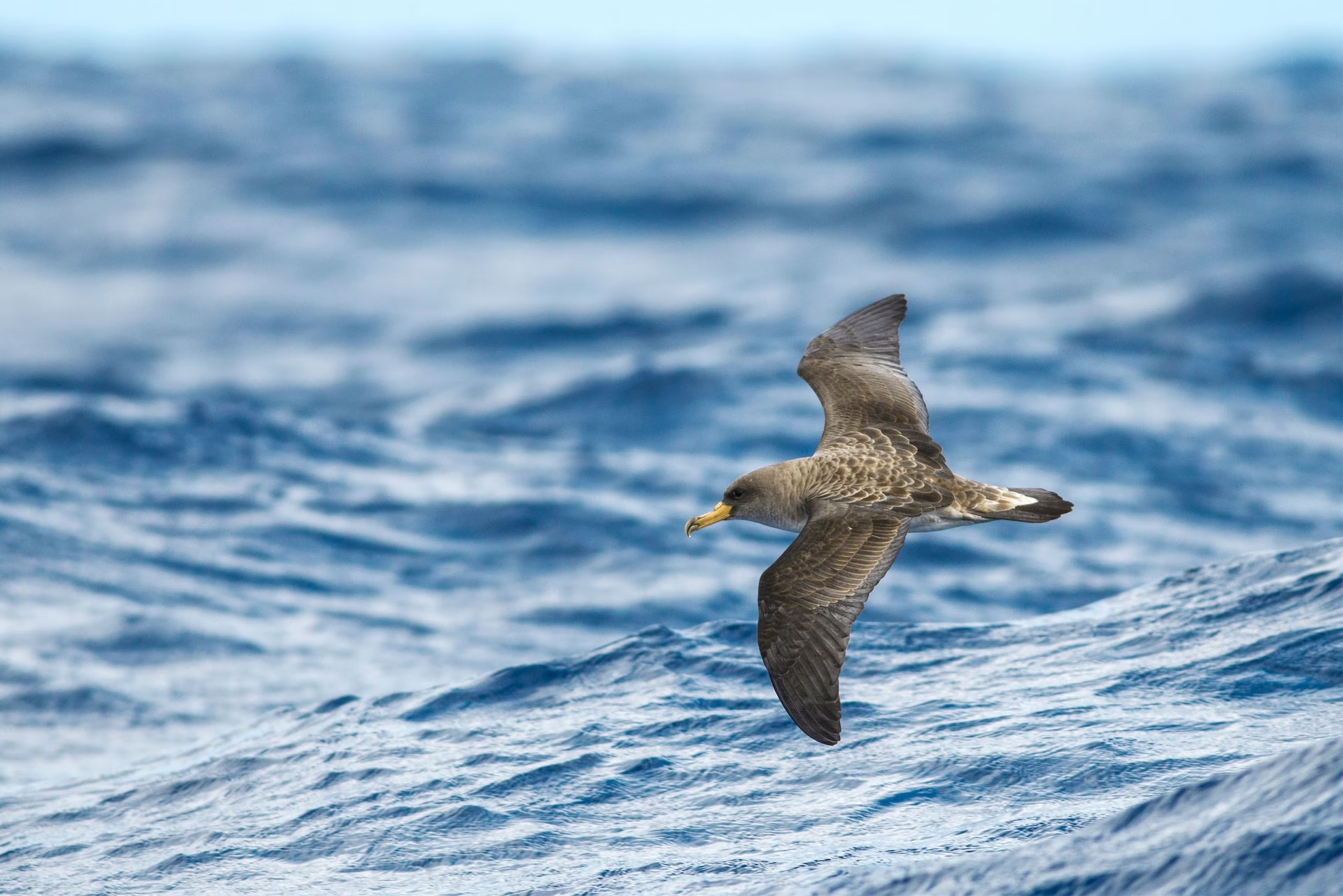
Picture this: You’re standing on a windswept cliff, the salty spray from crashing waves tickling your face, and suddenly a shadow glides across the foam—a massive bird with wings stretched wide, riding the invisible currents like it’s dancing with the wind. That’s the magic of seabirds. I’ve chased these feathered wanderers from the rugged shores of Monterey Bay to the remote outposts off Hawaii, and let me tell you, nothing beats the thrill of watching them defy gravity over endless blue. As someone who’s spent years tagging along on pelagic trips and volunteering at nesting colonies, I’ve learned they’re not just pretty sights; they’re the ocean’s nomads, telling us stories about the health of our seas. In this deep dive, we’ll explore these aerial acrobats—their lives, their secrets, and why they’re worth rooting for.
What Exactly Are Seabirds?
Seabirds are those resilient flyers and divers that make the open ocean their playground, from albatrosses circling the Southern Hemisphere to storm-petrels skittering over waves like tiny ghosts. Unlike backyard songbirds that hop from feeder to tree, these birds are built for the briny deep, spending 80-90% of their lives at sea, only touching land to breed.
They’re a diverse bunch, spanning 17 families and over 360 species, all sharing adaptations like salt-excreting glands above their eyes to handle seawater without a hitch. Think of them as the ultimate survivors in a watery world that’s as unforgiving as it is vast.
What draws me back every time? That raw freedom. On a foggy morning off California, I once watched a flock lift off in unison, their wings slicing the mist—pure poetry in motion.
The Art of Soaring: How Seabirds Defy Gravity
Soaring isn’t just flying; for seabirds, it’s an energy-saving superpower, letting them cover thousands of miles without flapping a feather. They harness wind shear—the speed differences in air layers over waves—and dynamic soaring, dipping low into troughs and climbing crests to gain lift, like surfing invisible swells.
This technique turns the ocean into a launchpad. Albatrosses, for instance, can log 600 miles a day this way, their long, narrow wings locked in place by a clever tendon system. It’s efficient poetry: minimal effort, maximum distance.
I remember my first real glimpse during a solo kayak paddle near Big Sur. A shearwater sheared the waves mere feet away, effortless as a sigh, reminding me why humans have envied these birds since da Vinci sketched their flights.
Dynamic Soaring Explained
Dynamic soaring is the seabird’s secret sauce for epic journeys, where they weave through wind gradients like pros threading a needle. Starting low over a wave trough, they angle upwind to catch faster air, then bank downwind for a speed boost—no flapping required.
Studies show this can slash energy use by 70%, vital for birds hauling across storm-tossed seas. It’s physics meets instinct, honed over millions of years.
Humor me here: If seabirds ran airlines, fuel costs would plummet, and we’d all arrive zen-like instead of rumpled.
Slope Soaring Over Waves
Slope soaring rides the updrafts from wave faces, much like pelicans hugging the shore, their wingtips nearly kissing the crests for that extra push. Brown pelicans master this, gliding in V-formations to scout fish schools below.
This low-level ballet conserves stamina during hunts, letting them scan vast expanses. Researchers at UC San Diego modeled it, finding pelicans offset 60% of flight costs this way.
One foggy dawn, I paddled too close to a pelican squadron—talk about feeling small; they owned the air like I never could.
Spotlight on the Stars: Iconic Soaring Seabirds
From pterodactyl-like frigatebirds to clownish puffins, soaring seabirds steal the show with their flair. Meet the heavy hitters that turn ocean skies into theaters.
These species aren’t just survivors; they’re specialists, each tweak in wing shape or bill a testament to evolution’s clever hand.
I’ve got a soft spot for the underdogs, like the storm-petrel that once buzzed my boat, its tiny form belying a spirit that crosses hemispheres.
Albatrosses: The Ocean’s Gliders
Albatrosses rule the roost with wingspans up to 12 feet, the wandering albatross logging 3,000 miles weekly via dynamic soaring. Their stiff, arched wings lock for hours, eyes locked on squid below.
Once nearly wiped out by longline fisheries, conservation’s turning the tide—populations like the black-footed are rebounding off Hawaii. (Learn more at BirdLife International’s albatross page.)
Spot one, and it’s humbling; I teared up watching a pair court off New Zealand, their sky-dance a 50-year commitment.
Shearwaters and Petrels: Shearers of the Sea
Shearwaters “shear” waves with stiff-winged glides, sooty shearwaters migrating 40,000 miles yearly from New Zealand to Alaska. Petrels, their pint-sized kin, flutter like bats on plankton hunts.
These tube-nosed wonders smell their food from miles out, a superpower land birds envy. Threats like plastic ingestion hit hard, but tracking tools are mapping safe routes.
A sooty shearwater once shadowed my sailboat for hours—cheeky escort, or just eyeing my lunch?
Pelicans and Frigatebirds: Pirates and Plungers
Brown pelicans plunge-dive from 30 feet, pouches ballooning with fish, while magnificent frigatebirds soar days without landing, kleptoparasitizing others mid-air. Frigates’ forked tails steer like rudders.
Pelicans’ wave-slope soaring saves energy; frigates’ non-waterproof feathers keep them airborne forever. Both face oil spills head-on.
I laughed watching a frigate harass a pelican off Florida—sky piracy at its finest, equal parts villainy and grace.
| Seabird Type | Wingspan | Soaring Style | Fun Fact |
|---|---|---|---|
| Wandering Albatross | Up to 12 ft | Dynamic | Covers 600 mi/day |
| Sooty Shearwater | 3-4 ft | Shear gliding | 40,000 mi migration |
| Brown Pelican | 6-7 ft | Slope | Plunges at 40 mph |
| Magnificent Frigatebird | 7-8 ft | Thermal | Steals food mid-flight |
Seabirds Versus the Rest: A Quick Showdown
Seabirds stand out from landlubber birds in ways that scream “ocean edition.” While songbirds flit through forests on short bursts, seabirds are marathoners, their lives a salty saga versus the twig-nesting domesticity of robins.
This contrast highlights evolution’s playbook: one for treetops, one for tempests. Seabirds’ longevity—up to 70 years—versus a sparrow’s 3-5 means slower rebounds from threats.
Ever compared a backyard finch to an albatross? One’s a sprinter; the other’s an ultramarathoner. My inland friends envy the scale.
Habitat and Lifestyle Breakdown
- Seabirds: Open ocean 90% of life; nest in colonies on cliffs or islands; saltwater diet, salt glands for osmoregulation.
- Shorebirds: Beaches and mudflats; probe sand for invertebrates; migrate overland, stop at wetlands.
- Songbirds: Forests, fields; insect/seed eaters; territorial, shorter flights.
Seabirds’ countershading (dark top, light bottom) camouflages them from fish below and predators above—shorebirds rely on speed.
Feeding Frenzy: Diets Compared
Seabirds dive or snatch surface prey; shorebirds peck at low tide; waders spear fish in shallows. A pelican’s pouch nets a school; a sandpiper’s bill sifts one worm.
This specialization ties them to ecosystems—overfishing starves seabirds faster than drought hits sparrows.
Pros of seabird life: Endless horizons, built-in desalination. Cons: Plastic-choked meals, storm survival.
Prime Spots to Witness the Soar
Want to see seabirds in action? Head to coastal hotspots where winds whip and waves roar. From California’s Farallon Islands to Scotland’s Bass Rock, these sites buzz with life.
Timing matters—spring migrations amp the show. Pack binoculars, not binoculars; ethical viewing means distance.
My top pick? Monterey Bay—easy access, epic sightings. Once there, a jaeger chase had me whooping like a kid.
Top U.S. Viewing Hotspots
- Monterey Bay, CA: Pelagic trips for albatrosses and shearwaters; year-round action.
- Cape May, NJ: Seawatch for southbound flocks; fall peak.
- Whitefish Point, MI: Lake Superior’s “seabird highway”—gulls, terns galore.
For global flair, try Iceland’s puffin cliffs or New Zealand’s albatross colonies.
Global Gems for Birders
- Farne Islands, UK: Puffins and arctic terns nesting en masse.
- Kaikoura, NZ: Albatross cruises amid whales.
- Stellwagen Bank, MA: Humpbacks and seabirds sharing the feast.
Pro tip: Book eco-tours; they minimize disturbance.
Nurturing the Nomads: Conservation Wins and Woes
Seabirds face a perfect storm—bycatch in 100,000 albatrosses yearly, plastics in 90% of fulmars, rising seas drowning nests. Yet triumphs shine: Bycatch down 75% in Alaska via streamer lines.
We’re turning tides with tracking tech and predator-proof islands. Your binoculars can help—report sightings to eBird.
Heartbreaker: Watching oiled birds struggle hits hard. But hope? It’s in every relocated chick fledging free.
Everyday Tips for Seabird Saviors
- Reduce Plastics: Ditch single-use; they end up in petrel bellies.
- Support Sustainable Fishing: Choose pole-caught tuna.
- Ethical Watching: 100m buffer at colonies; no drones low.
Tools like NOAA’s bycatch guides empower anglers to hook less birds.
Pros and Cons of Key Conservation Strategies
Pros of Streamer Lines:
- Cuts bycatch 60-80%
- Cheap, easy retrofit
Cons:
- Less effective in calm seas
- Needs crew training
Pros of Island Restoration:
- Boosts breeding 200%
- Protects multiple species
Cons:
- High initial cost
- Invasive species rebound risk
People Also Ask: Your Seabird Curiosities Answered
Ever wondered why these birds seem to walk on water or how they find their way home? Google’s “People Also Ask” uncovers gems like these, straight from curious searchers.
Why Do Seabirds Soar So Effortlessly?
Seabirds like albatrosses use dynamic soaring to tap wind energy over waves, gliding for hours without flapping. This saves calories for breeding, unlike powered flight in land birds.
It’s evolution’s gift—wing shapes optimized for shear, letting them roam vast oceans.
How Long Can Seabirds Fly Without Landing?
Some, like frigatebirds, soar days nonstop, covering 200 miles daily. Albatrosses push weeks, dynamic soaring their fuel.
Record? A great frigate clocked 2.7 million miles lifetime—talk about mileage.
What Do Soaring Seabirds Eat?
Mostly fish, squid, krill—snatched mid-air or dived for. Petrels filter plankton; gannets spear from heights.
Diet shifts with seasons, mirroring ocean health.
Where Is the Best Place to See Soaring Seabirds?
Monterey Bay or Cape May for U.S. views; New Zealand for albatross spectacles. Pelagic tours maximize sightings.
Pro: Boat rock mimics their world.
FAQ: Tackling Top User Queries
Got questions? Here’s the scoop on what folks really want to know about these wave-riders.
What Makes Seabirds Different from Other Ocean Birds?
Seabirds (albatrosses, petrels) are true ocean dwellers with salt glands and soaring wings; penguins swim more than fly, while gulls scavenge coasts. Seabirds’ lives are 90% pelagic—deep-sea focused.
This distinction matters for conservation; seabirds need vast protected waters.
How Can I Spot Soaring Seabirds from Shore?
Scan horizons at dawn/dusk; look for dark silhouettes against waves or white flashes in flocks. Binocs help ID wing shapes—long and narrow screams albatross.
Patience pays; one quiet vigil netted me a rare black-footed off Oregon.
What’s the Biggest Threat to Soaring Seabirds Today?
Bycatch in fishing gear tops the list, killing 300,000 yearly. Climate shifts prey, plastics poison—yet fisher education flips the script.
Act: Support ACAP for global safeguards.
Best Gear for Seabird Watching on a Budget?
Start with $50 binoculars, weatherproof jacket, and a field guide app like Merlin Bird ID. Add a spotting scope rental for trips.
My kit? Waterproof notebook for sketches—memories beat pixels.
How Do Seabirds Navigate Epic Soars?
Magnetic fields, stars, and smell guide them—petrels sniff oily slicks from 10 miles. GPS tracking reveals precision rivaling sailors.
Fascinating: Lost albatrosses still home in, instincts unbreakable.
There you have it—the soaring seabirds that turn oceans into highways. Next time waves whisper, listen close; these birds remind us the wild world’s worth fighting for. Head out, eyes skyward, and join the flock. What’s your first spot? Drop a line—I’d love to swap tales.