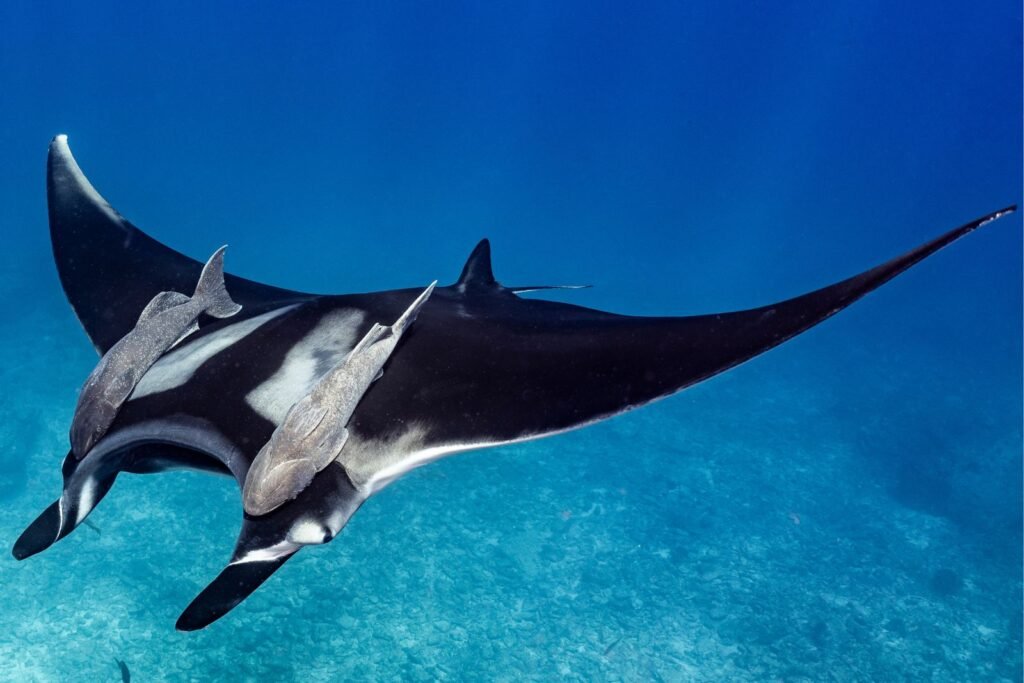
Imagine slipping into the warm, ink-black waters off Kona’s coast just after sunset, your snorkel mask fogging slightly from the thrill. The boat’s lights cut through the dark, drawing in tiny specks of plankton like stars falling into the sea. Then, out of the depths, they appear—those graceful shadows unfolding like living kites, somersaulting closer with curious eyes locked on you. That’s my first memory of swimming with manta rays in Hawaiʻi, back in 2012 on a whim during a family trip to the Big Island. My kids, wide-eyed and giggling through their snorkels, called them “underwater superheroes.” Little did I know, those gentle giants would hook me for life, pulling me back year after year to learn more. If you’re dreaming of your own encounter, or just curious about these ocean enigmas, stick with me. We’ll dive into ten surprising facts that reveal why manta rays aren’t just another beach postcard—they’re Hawaiʻi’s living legends.
1. Their Hawaiian Name Whispers a Secret of Breath and Life
Hāhālua—the Hawaiian word for manta ray—literally translates to “two breaths” or “two mouths,” nodding to the way these rays seem to exhale life from both sides as they glide. It’s a poetic nod in the Kumulipo, the ancient Hawaiian creation chant, where they’re woven into the second section as symbols of deep-sea wisdom and protection. I remember chatting with a kumu hula at a cultural talk near Keauhou Bay who explained how ancestors saw hāhālua as guardians, their dual “mouths” channeling the ocean’s breath to shield fishermen from storms. This isn’t just folklore; it’s a reminder that in Native Hawaiian culture, mantas embody resilience, much like the islands themselves rising from volcanic fire.
2. They’re the Ultimate Filter-Feeding Gymnasts
Unlike sharks, their cartilaginous cousins, manta rays don’t chase prey—they perform. With mouths agape up to four feet wide, they barrel-roll through plankton clouds, cephalic fins curled like horns to funnel dinner straight to their gills. Off Kona, I’ve watched them execute perfect loops under tour lights, somersaulting so close you feel the whoosh of water. Fun twist: their stomachs hold up to 300 pounds of tiny zooplankton daily, but they never stop moving to digest it all. It’s like they’re the ocean’s ballerinas, graceful yet voracious, turning midnight feeds into a show that leaves snorkelers breathless.
3. Spot Patterns: Nature’s Fingerprints for Tracking Family Trees
Each manta’s belly is a unique mosaic of black spots and blotches, like a cosmic barcode that scientists use to ID individuals—over 760 cataloged in Hawaiʻi alone by groups like the Hawaiʻi Association for Marine Education and Research (HAMER). During a volunteer tagging session in 2018, I helped snap photos of one named “Esmeralda,” her pattern a starry constellation we’d matched to sightings from five years prior. This tech lets researchers map home ranges, spot pregnancies (they birth one pup every two years after a year-long gestation), and even trace family lines. It’s not just science; it’s storytelling, revealing how these rays form loose “families” around cleaning stations where wrasse fish nibble parasites off them like tiny spa attendants.
4. Longevity Champs: Some Have Outlived Grandparents’ Tales
Mantas can live 50 years or more, with “Lefty”—a scarred veteran off Kona—spotted consistently since the 1970s, making her older than many readers here. Their slow growth means females hit maturity at 10-12 feet wingspan around age 8-10, but threats like boat strikes clip that timeline short. I once swam with a juvenile barely six feet across, its spots fresh and bold; guides estimated it at just two years old, a reminder of how precious each sighting is. In Hawaiʻi waters, where populations hover around 130 resident reef mantas, every resight feels like catching up with an old friend who’s seen decades of island sunrises.
5. Brainiacs of the Sea: Smarter Than Your Average Fish
Boasting the largest brain-to-body ratio among 32,000 fish species, mantas pass the mirror test—recognizing their reflection as self, not foe—hinting at self-awareness rivaling dolphins. University of Hawaiʻi studies show their fist-sized brains light up with curiosity, drawing them to divers like we’re the show. On a foggy Maui dive in 2019, one looped back to “inspect” my fin, eyes locked in what felt like pure wonder. It’s this intelligence that makes them social butterflies too, gathering in “trains” during mating seasons, males trailing females in hopeful parades. No wonder they’re vulnerable; their smarts make them bold around boats, but it also means they remember kindness from ethical tours.
6. Color Morphs: Chevron Rebels and All-Black Ghosts
Not all mantas rock the classic black-back-white-belly look—about 5% in Hawaiʻi are “black morphs,” nearly uniform ebony on both sides, blending like shadows in the deep. Chevrons, the majority, sport that stark contrast with a Y-shaped shoulder blaze. I mistook a black one for a reef shark once off Olowalu, heart pounding until it unfurled those telltale fins. Genetic quirks aside, these variations add intrigue; researchers suspect blacks avoid predators better in open water, while chevrons shine at night feeds. Spotting both on a single tour? That’s jackpot—nature’s way of keeping things unpredictable.
7. Cleaning Crews: Their Daily Spa Ritual
Every dawn, mantas pilgrimage to “cleaning stations” like Olowalu Reef on Maui, hovering patiently as tiny wrasse and cleaner shrimp pick parasites from their skin and gills. It’s a symbiotic hustle: mantas get buffed parasite-free, cleaners snag a meal without becoming one. During a daytime snorkel there, I floated mesmerized as a 12-footer held statue-still, jaws agape, while a school of yellow tang darted in like feisty hygienists. This routine boosts their health but crowds the sites, stressing reefs—why sustainable tours limit groups to 12 max.
8. Jump Masters: Breaching for Joy or Relief?
Ever seen a 2,000-pound manta launch skyward, twisting mid-air before splashing down? These breaches—up to 10 feet high—puzzle scientists: parasite shakes? Mating signals? Communication calls? In Hawaiian lore, it’s play, like kids cannonballing into waves. I witnessed a duo off Kohala in 2020, flipping in sync amid humpback songs, turning the sea into a circus. Rare in tours but common in calm mornings, these acrobatics remind us mantas aren’t just serene—they’ve got spirit.
9. Island Loyalists: Genetically Tied to Their ‘Ohana Shores
A 2023 NOAA study revealed Hawaiʻi’s reef mantas form isolated “island clans”—Big Island rays don’t mingle with Maui’s, their DNA as distinct as dialects. Kona’s crew sticks to a 90-square-mile turf, rarely wandering far. This fidelity makes them vulnerable; one boat strike ripples through generations. Tagging a local named “Kona Kid” showed he’d looped the same bay for years, a homebody in a nomadic world. It’s why citizen science apps like HAMER’s sighting reports matter—your photo could link family trees.
10. Tourism Titans: 80,000 Visitors Fueling a $100M Legacy
Yearly, 80,000 souls snorkel with Kona mantas, pumping millions into local economies while spotlighting conservation. Yet it’s double-edged: crowds scarify fins, lights disorient. Ethical ops like Manta Ray Advocates cap boats at six, donating fees to research. My 2024 tour with them netted a $5 donation per head to reef restoration—felt like paying forward the magic. As threats mount (fishing gear entangles 30% of tracked mantas), this eco-tourism pivot—from gill-plate trade to gentle encounters—could save them, turning awe into action.
These ten glimpses barely scratch the surface of hāhālua’s world, but they capture why they’re Hawaiʻi’s beating heart underwater. From cultural chants to midnight ballets, mantas teach us grace amid chaos. Ready to meet one? Let’s talk spots, tips, and how to do it right.
What Makes Manta Rays Unique in Hawaiian Waters?
Hawaiʻi’s mantas—mostly reef species Mobula alfredi—thrive in the archipelago’s warm currents, unlike migratory oceanic kin. Their resident lifestyle ties them to volcanic bays, where nutrient upwellings feast plankton blooms. What sets them apart? Endemic behaviors, like nightly pilgrimages to lit shores, born from human lights mimicking moon glow. I’ve felt that pull firsthand, floating amid a dozen at Manta Village, their cephalic fins glowing ethereal. Globally vulnerable, here they’re icons, blending ancient reverence with modern marvel.
Cultural Ties: Hāhālua as Ancestral Guardians
In Hawaiian moʻolelo (stories), mantas symbolize ʻaumākua—family protectors—guiding lost canoes with their broad forms. The Kumulipo invokes them early, linking sea depths to creation’s pulse. Elders like Roxanne Stewart share how hāhālua’s “two breaths” mirror life’s duality: calm surface, turbulent below. During a 2023 cultural snorkel, our guide chanted softly pre-dive, invoking respect; moments later, a manta circled our group like a blessing. This heritage elevates tours beyond thrills—it’s reconnection.
Myths and Legends Woven In
Legends whisper of mantas ferrying souls across Kai Moana, their leaps signaling safe passage. One tale from Lamakera (echoed in Hawaiian oral traditions) casts them as village saviors, halting hunts by revealing their gentle hearts. Today, these stories fuel bans; since 2009, Hawaiʻi outlaws killing them, honoring that protective ʻaumākua bond.
Habitat Hotspots: Where to Spot Them Wild
Kona’s west coast reigns supreme, with three feeding stations: Manta Village (Keauhou Bay), Manta Heaven (Keahole Point), and Kohala’s unnamed gem. Maui’s Olowalu offers daytime cleans, but Big Island’s nights steal the show—plankton galore under hotel beams. Pro tip: Visit post-full moon for dimmer skies, amplifying lights. I once snuck a shore view at Sheraton Kona, rays silhouetted against resort glow; free magic, but tours ensure safety.
Big Island vs. Other Islands: A Quick Comparison
| Island | Prime Spot | Best Time | Sighting Odds | Unique Vibe |
|---|---|---|---|---|
| Big Island | Kona Coast (Night) | Year-Round | 70-90% | Ballet under lights, crowded but epic |
| Maui | Olowalu Reef (Day) | Dawn/Dusk | 50-70% | Serene cleans, less traffic |
| Oʻahu | Rare Sightings | Variable | <30% | Urban surprise, no dedicated tours |
| Kauaʻi | Offshore Passes | Migratory | 20-40% | Wild, unpredictable adventures |
Big Island wins for reliability, but Maui’s intimacy suits beginners.
Encounter Essentials: Snorkeling and Diving with Mantas
Night snorkels dominate—grab a board, lights lure plankton, mantas follow. Divers get bubbles for extra allure; hybrids mix both. Expect 45-60 minutes in water, wetsuits against 75°F chills. My tip: Practice breath-holds poolside; panic-free floating maximizes joy. No swimming skills? Opt for calm Keauhou departures.
Pros and Cons of Snorkel vs. Dive
Snorkeling Pros:
- Easier entry, surface views of rolls
- Family-friendly (ages 6+)
- Cheaper ($100-150/person)
Snorkeling Cons:
- Limited depth, potential seasickness
- Less “up-close” than diving
Diving Pros:
- Bubbles magnetize mantas
- Immersive somersaults below
- Adrenaline for certified folks
Diving Cons:
- Certification required, pricier ($150-200)
- Deeper currents, no beginners
Top Tour Picks: Where to Book Your Adventure
For navigational ease, head to Honokohau Harbor—Kona’s tour hub. Transactional gold: Sea Quest Hawaii for budget bliss ($129, 92% sightings, hot cocoa post-swim); Manta Ray Advocates for eco-elites ($150, max 6 guests, research donations). Fair Wind’s Hula Kai luxury catamaran? Splurge at $189 for sunset sails en route. Book via Viator for deals, or direct for perks like free reschedules.
- Best for Families: Hawaii Island & Ocean Tours—small boats, kid wetsuits.
- Best for Divers: Big Island Divers—SCUBA hybrids, PADI pros.
- Best Ethical Pick: Manta Ray Advocates—sustainable, no hull lights.
Conservation Corner: Threats and How You Can Help
Vulnerable per IUCN, Hawaiʻi’s mantas face boat props (20% scarred), ghost nets, and tourism overload—80,000 visitors yearly risks stress. Wins: 2009 state ban, NOAA’s genetic mapping showing tiny 130-strong populations. Light humor: They’re not sharks, but one bad propeller day and poof—your bucket-list buddy’s gone. Emotional hook: Imagine no more midnight dances for your grandkids.
Quick Ways to Advocate:
- Report sightings to HAMER—your pic aids tracking.
- Choose greenlisted tours via Hawaii Ocean Watch.
- Ditch single-use plastics; ocean acidification starves their plankton pantry.
People Also Ask: Real Google Gems Answered
Pulled straight from search curiosities, these hit common intents.
Are Manta Rays Dangerous in Hawaii?
Nope—stinger-less pacifists! They’ve no barbs like stingrays, and attacks? Zero recorded. They’re curious, not aggressive; think puppy, not piranha. That said, respect space to avoid accidental fins to the face.
What’s the Best Time for Manta Ray Tours in Hawaii?
Year-round, but winter (Dec-Mar) amps sightings with calmer seas. Night tours peak 8-10 PM; avoid full moons when natural light dilutes plankton pulls. Pro: Shoulder seasons mean fewer crowds.
Can You Swim with Manta Rays for Free in Hawaii?
Shore spots like Sheraton Kona’s lit bay work—rent gear from Snorkel Bob’s ($20/day)—but odds drop to 50% sans boat. Ethical caveat: No chasing; let lights do the work.
How Do You Tell Manta Rays from Stingrays?
Mant as soar mid-water, mouths forward, no tails with barbs. Stingrays hug sand, venomous spines aft. Easy ID: If it flies like a bat, it’s manta; if it flaps like a pancake, sting.
Do Manta Rays Migrate in Hawaii?
Reef mantas here? Loyalists, not wanderers—sticking to island bays. Oceanic types roam wider, but Kona’s crew claims a 30-mile coastal zip code.
FAQ: Your Burning Questions, Straight Talk
How Old Do Manta Rays Get in Hawaiian Waters?
Up to 50+ years—Lefty’s pushing 45, outlasting lava flows. Slow repro (one pup biennially) makes every individual a treasure.
What’s the Wingspan of Hawaiian Manta Rays?
Reef mantas hit 11-18 feet; newborns start at 6. I’ve brushed a 14-footer—felt like high-fiving a hang glider.
Are There Manta Ray Tours on Other Islands?
Big Island dominates, but Maui’s Olowalu has daytime drifts. Oʻahu? Spotty; book this Maui option for variety.
Can Kids Join Manta Ray Snorkels?
Most say 6+, but check wetsuit fits. My 8-year-old aced it with a float belt—pure wonder, zero fear.
How to Stay Safe During a Night Snorkel?
Buddy up, signal “OK” often, no sudden moves. Guides brief currents; seasick? Dramamine pre-board. And breathe—mantas sense calm vibes.
Whew, from ancient chants to conservation calls, manta rays remind us the ocean’s pulse beats strong in Hawaiʻi. That first swim changed me—less hurried, more humbled. Whether you’re plotting a Kona escape or just armchair diving, these facts linger like salt on skin. What’s your manta moment? Drop it below—I’d love to swap stories. Mahalo for reading; now go chase that underwater ballet.